Ken’s Scotia Festival schedule

I attended my first Scotia Festival as a student in 1993- Peter Lieberson was the composer-of-the-year, Pierre-Laurent Aimard was the pianist-in-the-house. How could I not want to keep coming back? Over the following years I got to meet and work with composers like Oliver Knussen  and Joan Tower, instrumentalists like Marc-Andre Hamelin, and I got to share a stand with Desmond Hoebig and Fred Sherry. I also cut my conducting teeth there, and had all kinds of memorable chamber music experiences/ It broke my heart to realize I was getting too old to keep coming back as a student at some point.

I was last there as a guest artist in 2004. So, how excited am I to be heading back to an event that absolutely rightly calls itself the “greatest little chamber music festival in the world”? (FYI- the last piece I played at the festival was Turangalila- not exactly “little” or “chamber music.”)

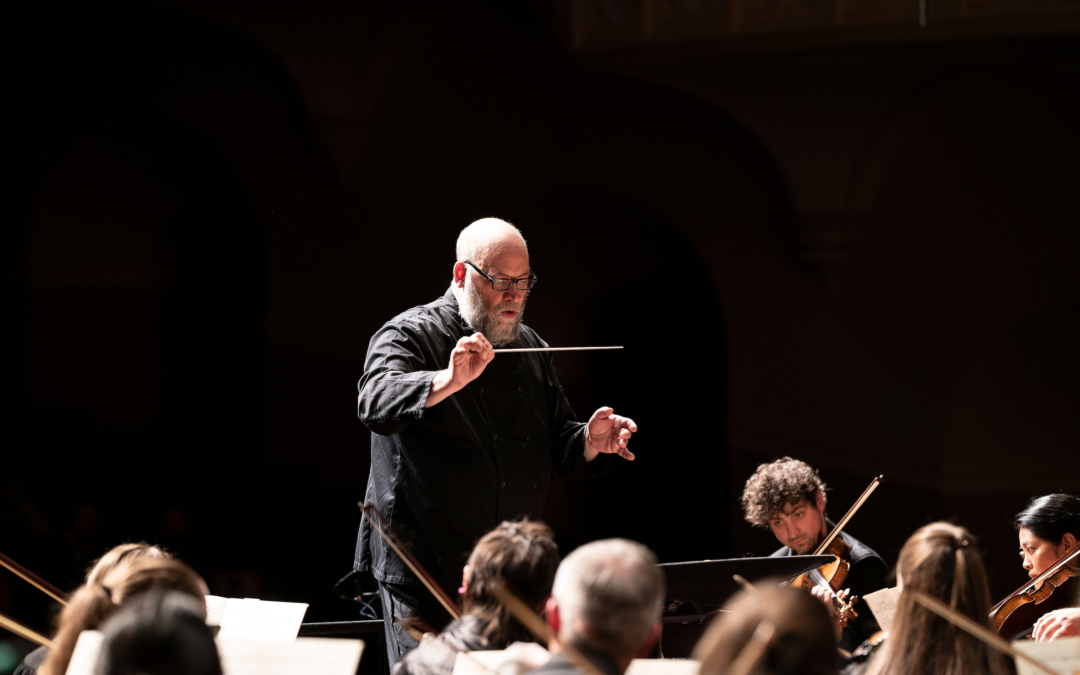
Here’s my performance schedule for the two weeks. It should be an absolute blast- great repertoire, great colleagues. If you’re anywhere within about 1000 miles of Halifax, come and catch a concert or two. There are too many highlights to count for me- my first time to conduct anything by John Adams, a chance to do Berg’s monumentally challenging Chamber Concerto, a Britten anniversary celebratory performance of the Frank Bridge Variations and a chance to play some of Epomeo’s real party pieces. The complete Festival schedule is on their website. 

Highlight Concert 1
Monday, May 27, 2013 7:00 pm
Sir James Dunn Theatre, Dalhousie Arts Centre
Bach - Chaconne - Philippe Djokic, violin
Schnittke - String Trio - Ensemble Epomeo (Carolin Chin, violin, David Yang, viola, Kenneth Woods, cello)
Schubert - E flat major Piano Trio - John Novacek, piano, Mark Fewer, violin, Denise Djokic, cello

Recital 1 – Ensemble Epomeo
Tuesday, May 28, 2013 7:00 pm
Sir James Dunn Theatre, 6101 University Ave.
Ensemble Epomeo
Carolin Chin, violin, David Young, viola Ken Woods, cello
Krása – Tanec & Passacaglia and Fuga
Penderecki – String Trio
Kurtag – Signs, Games and Messages
Beethoven – String Trio in E-flat, Op. 3

Highlight Concert 3
Friday, May 31, 2013 7:00 pm
Sir James Dunn Theatre, Dalhousie Arts Centre
Britten - Cello Suite No. 3 - Denise Djokic, cello
Brady, Tim - World-premiere - Suzanne Lemieux, oboe, Tim Brady, electric guitar, Caroline Chin, violin, David Yang, viola, Kenneth Woods, cello, Simon Docking, piano
Tchaikovsky - Piano Trio - John Novacek, piano, Mark Fewer, violin, Denise Djokic, cello

Highlight Concert 4
Tuesday, June 4, 2013 7:00 pm
Sir James Dunn Theatre, Dalhousie Arts Centre
Berg - Concerto for Piano, Violin & 13 Winds - Scotia Winds, Robert Uchida,violin, Simon Docking, piano, Ken Woods, conductor
Mozart - Wind Serenade No. 10, K. 361, Gran Partita - Scotia Winds, Ken Woods, conductor

Highlight Concert 5
Wednesday, June 5, 2013 7:00 pm
Sir James Dunn Theatre, Dalhousie Arts Centre
Weinberg - String Trio - Ensemble Epomeo (Carolin Chin, violin, David Yang, viola, Kenneth Woods, cello)
Brahms  - Clarinet Trio, Op. 114 - Micah Heilbrunn, clarinet, Blair Lofgren, cello, Peter Allen, piano
Smetana - Piano Trio - John Novacek, piano, Mark  Fewer, violin, Denise Djokic, cello

Highlight Concert 6
Friday, June 7, 2013 7:00 pm
Sir James Dunn Theatre, Dalhousie Arts Centre
T. Brady – “We’re Hardcore”  - Kenneth Woods, conductor, Janice Jackson, soprano, Airi Yoshioka, violin, Caroline Chine, violin, David Yang, viola,  Blair Lofgren, cello, Max Kasper, bass
Kurt Weill – The Threepenny Opera – Scotia Winds, Kenneth Woods, conductor
Britten – Variations on a Theme of Frank Bridge, Op.10 – Scotia Festival Strings, Kenneth Woods, conductor

Gala
Sunday, June 9, 2013 2:00 pm
Sir James Dunn Theatre, Dalhousie Arts Centre
John Adams - Violin Concerto - Mark Fewer, violin
Mozart - Piano Concerto No. 17 in G major, K.453 - John Novacek, piano
Shostakovich - Cello Concerto - Denise Djokic, cello

Share

Avie Release Volume 3 of KW Schumann/Gal cycle

KENNETH WOODS RELEASES

HANS GÁL’S SYMPHONY NO. 2 AND SCHUMANN’S SYMPHONY NO. 4

WITH ORCHESTRA OF THE SWAN

ON AVIE


THIRD OF FOUR-DISC SERIES

Kenneth Woods, Principal Guest Conductor of Stratford-upon-Avon based Orchestra of the Swan, has made international headlines for his ongoing cycle of world-premiere recordings of the Symphonies of Hans Gál, paired with those of Robert Schumann on the AVIE label. This month brings the third of the four-disc series with  Gáls Second and Schumann’s Fourth (AV 2232).

Continue reading

Share

CD Review- American Record Guide on Spring Sounds, Spring Seas

A new review from American Record Guide for “Spring Sounds, Spring Seas.”

AMERICAN RECORD GUIDE – MAY/JUNE 2013 

Spring Sounds, Spring Seas 

James Nyoraku Schlefer (1956-).

 Haru No Umi Redux, for shakuhachi, koto & ensemble

(2011) [10:26]

 Shakuhachi Concerto (2009) [26:03]

Daron Hagen (1961-).

 *Genji, for koto, winds, strings and marimba (2011) [27:53]

James Nyoraku Schlefer (shakuhachi). Yumi Kurosawa (20-string koto). Orchestra of the Swan c/b Kenneth Woods / *David Curtis. 

Recorded: Civic Hall, Stratford-upon-Avon, England, 28 May 2011.

This seductive album presents three recent works that fuse Asian and Western musical traditions, a popular trend. James Nyoraku Schlefer’s Haru No Umi Redux is a skillful reworking of a seminal piece from 1929 that was largely responsible for the incursion of Western gestures into Japanese music. It is an enchanting piece of exceptional delicacy, as is Schlefer’s 2009 Shakuhachi Concerto, which blends the otherworldly sound of the shakuhachi with harp and strings. The concerto has dissonant moments and plenty of rhythmic punch, but its basic mood is hazy and tranquil. The composer is a Grand Master of the shakuhachi, one of only a few Westerners to achieve this rank. His skill is illustrated especially in the cadenza that opens the impressionist II.

More overtly sensuous is David Hagen’s 2011 Koto Concerto: Genji, an “opera without words” based on an 11th Century narrative. It consists of five psychological portraits. The second, ‘Falling Flowers’, has a poignant violin solo; III, ‘Maiden on the Bridge’, demonstrates the subtlety of koto soloist Yumi Kurosawa, who makes her ancient instrument sound like a small orchestra. The bent sounds, rich chords, and strumming on various parts of the instrument produce marvelous colors.

The Orchestra of the Swan, a British chamber orchestra, plays with expressive understatement. The warm recording, at a concert, has all the qualities of a studio production. East-West fusions seem immune to the struggles of the classical music scene. This engaging album shows why.

– SULLIVAN

Share

Explore the Score- Brahms Symphony no. 4 in E minor

This is a slightly expanded version of an essay on Brahms’s last symphony commissioned by The Bridgewater Hall for last week’s Budapest Festival Orchestra concert.

“But in dark, dramatic outbursts such as those in the first and last movements of his Fourth Symphony, something apocalyptically grandiose and superhuman takes place. He had outgrown the passionately romantic extravagance of subjectivity; free from illusions, he could now face the world from the remote viewpoint of a stoic, without illusions and without self-pity.”


Hans Gál- Johannes Brahms, His Work and Personality

Brahms

One might be tempted to call the tragic symphony the white tiger of musical genres. Of all musical species, it is one of the most fascinating and powerful, yet sightings are rare. Between the two greatest specimens, Mozart’s 40th and Mahler’s 6th, one finds precious few examples. Beethoven never wrote one, and neither did Schumann, Bruckner, Dvorak or Schubert. If the 19th c was the golden age of the symphony, the lone great tragic essay in the genre was Brahms’s Fourth.

Continue reading

Share

CD Review- Joshua Kosman/SF Chronicle on Gal/Krasa Complete Trios

A new review of our debut CD from critic Joshua Kosman in the San Francisco Chronicle.

Kosman describes the Gal Serenade as “a witty, sardonic and often beautiful score, which adopts the mannerisms of the Classical style while simultaneously sending them up with love and zest,” and hails Gal’s opus 104 for “Gál’s undeniable mastery of resources.” Most enthusiastic of all, is Kosman’s endorsement of Krasa’s Passacaglia and Fugue, which ends the CD: “Krása’s Passacaglia and Fugue is a brilliant revelation, a savage takedown of artistic ideals in which order and luxuriance devolve into chaos. It’s a compact, unforgettable masterpiece, and the Ensemble Epomeo – which includes Woods along with violinist Caroline Chin and violist David Yang - gives it a superb performance.”

Read the whole thing here

Buy here from MDT UK

Buy here from Arkiv USA

Buy here from Amazon UK

Buy here from Amazon USA


Share

CD Review- Fanfare Magazine, Jerry Dubbins of Gal/Krasa Complete String Trios

A new review of the Complete String Trios of Hans Gal and Hans Krasa from Fanfare Magazine


GÁL Serenade in D, op. 41. Trio in fT, op. 104. KRÁSA Tanec (Dance). Passacaglia and Fugue Ÿ Ens Epomeo Ÿ AVIE 2259 (67:08)


Buy here from MDT UK

Buy here from Arkiv USA

Buy here from Amazon UK

Buy here from Amazon USA

Epomeo Play Krasa and Gal

Hans Gál has been receiving some well-deserved, if belated, attention on disc lately. Just a couple of issues back, I reviewed a must-have recording by cellist Antonio Meneses performing Gál’s very beautiful cello concerto. And now, here on the present release, we have what is advertised as the complete string trios of both Gál and his close contemporary, Hans Krása. Though born only nine years apart— Gál in 1890 and Krása in 1899— Gál was fortunate to escape the advancing Nazi forces into Austria, fleeing to the U.K. in 1938 and eventually settling in Edinburg, where he died in 1987.

Krása was not so lucky. He was deported first to the Theresienstadt concentration camp and then transferred to Auschwitz where he was killed in 1944. Given Krása’s much shorter life, it’s understandable that his output is considerably less than Gáls’s. Neither composer, however, apparently devoted much effort to the string trio, since the contents of this CD are said to be the extent of it.

The two Gál works are recorded here for the first time, and, in terms of scale, they’re both major additions to the literature, each lasting over 25 minutes. Written in 1932, before the serious trouble began, the Serenade lives up to its title, in name, if not strictly in form. The piece is in four movements in what I would describe as a nod to the Baroque and Classical periods as reflected through the lens of an easygoing, listener-friendly modernist style that teases and tickles the ear with fractured and fragmented references to familiar pieces. Throughout the first movement (Capriccioso), for example, you’ll hear the distinctive three-note pattern that permeates the first movement of Bach’s G-Major Brandenburg Concerto.

While I wouldn’t want to push the analogy too far, I’d say that to a degree Gál’s Serenade reminds me of some of Hindemith’s Kleine Kammermusik pieces. Gál’s score is mostly busy, breezy, and boffo, perhaps more in the manner of a divertimento than a serenade.

Just as long, but in only three movements this time, the Trio in FT Minor is a much later work, dating from 1971, after the trouble was over. The piece was commissioned by the London Viola d’amore Society and originally scored for violin, viola d’amore, and cello, but Gál made this version for traditional string trio at the same time. The mood is now introspective, brooding, and perhaps a bit bereft. If there’s an analogue here, I’d have to say that the Trio seems to look back to the highly chromatic, freely tonal style familiar to us from works of the late 19th- and early 20th-century Viennese composers before they succumbed to the siren of dodecaphonism. In other words, Gál’s Trio is a nostalgic soak in a muddy pond. But mud baths are supposed to be therapeutic, and this one left me with a nice, warm glow.

The Krása pieces are considerably shorter—six minutes for Tanec and just under 10 minutes for the Passacaglia and Fugue. Tanec, or Dance, was composed in the last year of Krása’s life. With its strong rhythmic thrust, ostinato figure in the cello, and Hungarian folk flavor, the music is at first suggestive of Bartók, but as Kenneth Woods’s note indicates, the piece is meant to be evocative of trains, with the obvious reference to the boxcars that transported Krása and the millions of others to the death camps. To quote Woods, “the atmosphere ranges from eerie nostalgia, to barely contained menace, to explicit violence,” and ends in a series of manic shrieks.

Written later that same year (1944), the Passacaglia and Fugue is Krása’s last completed work. It’s difficult to describe this music of broken spirit and soul. Initially, Shostakovich comes to mind in a frozen soundscape benumbed by cruel and forbidding cold. But slowly, the music rises to a pitch of bickering and physical altercation.

The recording at hand represents the Ensemble Epomeo’s disc debut. Named for the Mediterranean volcano, Mt. Epomeo, the group was founded when the three players—Caroline Chin, violin; David Yang, viola; and Kenneth Woods, cello—came together at the Festivale di Musica da Camera d’Ischia in Italy on 2008. It’s always difficult to judge an ensemble in unfamiliar repertoire, but I think I can say that the Epomeo’s musicians are more than up to the technical task of their business and that they sound intensely engaged in the emotional worlds of these two composers and their music. I would now look forward to hearing the ensemble in something more familiar, like Mozart’s great Divertimento in EI Major, K 563, or the Beethoven string trios. Meanwhile, this new, excellent recording is strongly recommended.

Jerry Dubins

Share

CD Review- Martin Anderson, Klassik Magazine, on Gal/Krasa Complete String Trios

Gál  Serenade D dur, op. 41; Trio in F sharp major, op. 104; Krása TanecPassacaglia og Fuge

Ensemble Epomeo

Avie AV2259 (67 minutter)

1 2 3 4 5 6


“This disc of string trios presents two highly contrasted victims of Hitler. The music of Hans Gál (1890–1987), born just outside Vienna, embodies the virtues of Viennese tradition: it is elegant, cultured and effortlessly resourceful – Gál was both a natural lyricist and a natural contrapuntist, which means that his music appeals to heart and brain in equal measure. The Serenade (1932) is full of understated energy, like happy Reger; by the time of the op. 104 Trio (1971), when Gál was 81, his music is suffused by a profound and gentle wisdom; the closing set of variations is masterly. I knew Hans Gál at the end of his long life. He told me once that his parents had taken him, when he was six, to hear one of Mahler’s first performances at the Wiener Hofoper. ‘But that was 1897’, I gasped in astonishment, but he still remembered it clearly, and you have the same sense of stylistic continuity in his music. The raw energy in the two pieces by Hans Krása (1899–1944), by contrast, indicate what was lost in October 1944 when, with his fellow composer-inmates from the ghetto of Terezín, he was bundled onto a transport to Auschwitz and gassed two days later. There’s a rough-edged vitality here that reveals that the Janáček tradition, in normal circumstances, would have had lots of life in it yet. Beautiful performances from the Ensemble Epomeo.”

Buy here from MDT UK

Buy here from Arkiv USA

Buy here from Amazon UK

Buy here from Amazon USA

Share

CD Review: MusicWeb International on Gal/Krasa String Trios

A new, five-star review for the Complete String Trios of Hans Gal and Hans Krasa from MusicWeb International, also available at Art Music Reviews here.

See also our earlier MusicWeb review from Steve Arloff, and Recording of the Month designation here.


“Sound quality is very good. In their debut recording, Ensemble Epomeo (named after an Ischian mountain) are thoroughly convincing from beginning to end. Their sense of ensemble is democratic, their attention to the score attentive and respectful, and their tone warm and welcoming. Expressively they are as much at home with the elegant, small-R romantic classicism of Gál as with the more semantically ambiguous colourings of Krása.”


Buy here from MDT UK

Buy here from Arkiv USA

Buy here from Amazon UK

Buy here from Amazon USA


Share

CD Review- RECORDING OF THE MONTH: MusicWeb International, Steve Arloff on Gal/Krasa Complete String Trios

A new review from the popular website MusicWeb-International for our debut CD from critic Steve Arloff. The disc has been selected by MusicWeb as a RECORDING OF THE MONTH for October, 2012.

The complete review follows below, but shouldn’t you go ahead and order the CD first?


Buy here from MDT UK

Buy here from Arkiv USA

Buy here from Amazon UK

Buy here from Amazon USA


It seems that at last the star of Hans Gál is in the ascendant with symphonies (2;3;4), hisviolin concerto,cello concerto,cello works,violin and piano works,piano trios,piano duosand piano solo music (reviewreview), to name a few, being released in recent years. This is a vast improvement upon the situation that pertained only in 2001 when there were but three works by him that could be found on disc; today the total tops 40.

Born in Vienna of Hungarian Jewish extraction Gál not surprisingly left Germany where he had worked as Director of the Conservatory in Mainz after he was dismissed by the Nazis and his music was banned. First he returned to Vienna until Austria was annexed by Hitler in 1938 then he came to the UK though he had a hard time of it with a wife and two children and no immediate job. In May 1940 he was incarcerated due to the panicky atmosphere that pertained in Britain at the time, firstly in Huyton then in the internment camp in Douglas, Isle of Man. Though Gál was not classed as a category A alien all of whom were detained when war broke out, Churchill’s edict to “collar the lot” following the fall of France led to category B aliens and a large percentage of category C being arrested too, adding up to a total of over 27,000 internees. It is ironic that Jews who were the most obviously sympathetic to the Allies should have been included in this sweep. Eventually the folly of this policy was recognised and Gál and many others were released after a few months. For most of his long life he resided in Scotland where he added to the rich musical life there working at Edinburgh University until well beyond retirement age.

Gál’s Serenade in D Op.41 dates from 1932 and is a most delightful work full of free-flowing melodic lines with an upbeat Haydnesque beginning that belies what’s to come which is altogether more contrapuntal but still of a generally whimsical character and the first movement fairly skips along its ten minute length. Gál certainly knew how to write a good tune and wasn’t afraid to do so at a time when the avant-garde brigade were flexing their musical muscles and when to be experimental was deemed to be de rigueur. Though modern in character this music is totally beguiling and the main theme will easily become one of those little worms that play themselves over and over again in your mind and soon have you convinced that you’ve known it for years despite it being a world première recording. The second movement marked Cantabile. Adagio is a heartfelt, beautiful little tune that while darker is so gorgeously lush that it will still cause you to smile with delight. The main theme which is introduced by the violin is taken up at the close by the viola against a wonderfully rich background. The Menuetto is back to the Haydnesque style of the opening movement with the cello playing a significant role in conversation. The violin hovers above it in canon and one is tempted to speculate that Papa Haydn himself would have heartily approved of its inventive character. The final movement Alla marcia is another wonderfully melodious and brilliantly scintillating piece of writing. All kinds of clever musical devices propel things along and the work finishes with a flourish.

Gál’s Trio Op.104 was composed almost forty years later in 1971 to a commission from the London Viola d’Amore Society and the version here for a conventional trio was written at the same time. It is a work that is altogether darker in mood than theSerenadeas perhaps is to be expected from a composer of over 80 as opposed to one of 42. In any event it is another example of this highly individual and marvellous composer who appears never to have been at a loss to come up with fabulous tunes that win the listener over on first hearing. While the opening Tranquillo con moto in dark and deeply reflective the Presto is light and humorous. It dances along its short length and leads into the finale Tema con variazione with seven distinct sections. The players’ cellist Kenneth Woods wrote the notes. He has perfectly captured the essence of this last movement which, as he puts it, incorporates “recurring cycles of despair and hope, without Gál ever tipping his hand as to whether the work is likely to end in darkness or light”. He explains further that Gál’s solution is to “avoid a resolution entirely” by concluding with an Alla Marcia in humorous mode. This alludes to the fact that whatever happens, life marches on and “The cycle of tragedy and hope is eternal, the root of all human comedy…” What better way to look at life and to share that outlook with others in musical terms that are so unambiguous.

The two other works on this disc are by a composer from the same era, the same part of the world (central Europe), and the same Jewish heritage, who suffered the fate that Gál undoubtedly would have done had he not come to Britain when he did. Hans Krása was also sent to an internment camp and the insert in the CD shows a photo of each composer alongside their camps. However, Krása ended up in Terezin in the north of his native Czechoslovakia where he was active in the busy musical life that pertained there and like other composers confined there wrote several works in these inauspicious surroundings. Then in October 1944 he was moved to Auschwitz along with fellow composers Gideon Klein, Viktor Ullmann and Pavel Haas, where he was sent to the gas chambers just two days after his arrival. I find the thought of the deaths of these highly talented composers almost unbearable, particularly when I hear their music and imagine what other joys they would have brought to the world had they lived. Whilst rejoicing in the life of Hans Gál who lived to the age of 97 and whose music developed over a long and productive life it is heartrending to listen to the music of Krása who died at 45. Both works here were written in his final year. Krása, in common with his fellow composers in Terezin, refused to allow their Nazi captors to crush their spirit. These works are defiant responses to the madness that The Third Reich unleashed upon the world. In Tanec(dance) which title belies its content which is savage and biting, there are evocations of trains that contrast feelings of nostalgia with overt menace. I was reminded of Steve Reich’s Different  Trains and am pretty sure that Reich may well have drawn inspiration from this work for his own. There is so much said in such a short piece it is quite overwhelming. In Passacaglia and Fuga,  Krása’s last completed work, he expresses himself so profoundly it is enough to make you weep. Kenneth Woods’ excellent notes explain the musical structure perfectly which enables the listener to get so much more out of the music than they would without them. I’m not going to try to paraphrase or come up with my own interpretation which I couldn’t do in any case but will quote his summing up of the work as “…discussion degenerates into argument and argument descends into violence.” Who can wonder at such musical thoughts when you are knowingly heading for extermination for being born something your captors will not tolerate.

The disc leaves you feeling profoundly moved as well as drained and I can hardly imagine how it must feel to play such music. This is an extremely important musical document on all counts as it introduces us to two hitherto unrecorded works by a great 20th century composer who exposure has at last revealed a huge talent and two works by a wonderful composer whose creative genius was snuffed out in his prime.

The Ensemble Epomeo play all four compositions with huge commitment and brilliant flair revealing every nuance in four wonderful works for string trio. These can sit alongside anything written in this genre.

In every way this is a fantastic disc that listeners will want to hear again and again.

Steve Arloff

Share

CD Review- Classical CD Reviews, Gavin Dixon on Gal/Krasa Complete String Trios


Music by the Theresienstadt composers comes with all sorts of historical and political baggage, and while the musical qualities of Ullmann, Krása, Klein and their colleagues are now widely appreciated, their works are usually presented together and in isolation from anything else. This approach is defensible in some musical respects, particularly through the fact that each of the composers who worked at Theresienstadt was transformed by the experience, leading them to write music they would never have contemplated on the outside. But the ghetto approach to the presentation of these works perpetuates the injustice that created it. With that in mind, it is all the more laudable that two Theresienstadt works by Hans Krása are programmed here with the Gál. The camp makes its presence felt in the terseness of Krása’s musical prose; his message is concentrated because his days are numbered. Even so, there are interesting stylistic links between the two composers. The Brahms in Krása’s music is mediated by Schoenberg, whereas Gál takes his direct. Dance forms underpin the more energetic passages in both composers’ works, but in both cases the links with any actual folk tradition are tenuous.
Ensemble Epomeo does both composers a great service with their precise, lively and stylistically astute performances. The clarity in all the textures allows both men’s contrapuntal innovations to shine through. There is atmosphere here too (helped by the warm recorded sound) and the long movements of both Gál works are fabulously involving, with the ensemble leading the ear through the composers various arguments and corollaries.
Nobody is suggesting that any of this music is being rediscovered or saved from terminal neglect. In fact, both composers are well represented on disc, at least in terms of the number of commercial recordings each has to his name. But the quality of these performances may help to initiate a new era in the reception of their works, and especially of Gál’s. His Serenade definitely deserves a central place in the recital repertoire, even if it requires performances of this high standard to make its many qualities fully apparent.
Share

Bruckner- Freeing emotion from narcissism

When I first encountered the music of Anton Bruckner (the first movement of the 9th Symphony), it was love at first sight.  From the moment I dropped the needle a the edge of the LP, Bruckner picked me up with his mind powers and shook me like a dog. I’ve never been able to understand how anyone could not love this music, and yet there are always people in every orchestra and audience who don’t seem to get it. The other night in a rehearsal of the 7th, our auxiliary third sarrusophone  player was overheard loudly exclaiming “this piece is shit.”

(Ken on Bruckner)

To me this is like saying the Grand Canyon is shit, the Alps are shit or the Pacific Ocean is shit. This is like saying sunshine and fresh air and IPA’s and babies and and books are shit.

I don’t get it.

What is it about Bruckner that makes those who love the music love it so much? Certainly the fact that the powerhouse passages are so gargantuan that one can’t help but want to pick up a spear and charge into battle against the marauding hordes doesn’t hurt. The sheer sound of Bruckner’s music in full flight is, or should be, impossible to resist.

But lost, perhaps, in questions of Catholicism, Nazis, necrophilia, tremolos and performance practice is what makes Bruckner’s music so affecting, and possibly what explains some people’s inability to get close to it- it is some of the most intensely emotional music ever written.

That one almost never comes across a description of Bruckner’s music as “emotional” is, I think, a telling commentary on a broad ranging loss of clarity in our collective thinking about what “emotion” really means. Popular culture, which has long since sunk its poisoned talons into the very heart of our thinking about art of all kindshas gradually made “emotion” a dirty word.

In popular culture, we too often equate “emotion” with extroversion, with narcissism, with a kinetically manifested sense of outward excitement, and with a kind of adrenalized hyperactivity. Pop culture tells us that the most “emotional” artists are the ones who sing the loudest or shake their asses the hardest. When someone cries on camera in a moment of personal tragedy captured by our voyeuristic news media, we’re told that they are responding with intense emotion. But does the person who stands on the steps of the courthouse after trial in tears really feel more deeply or suffer more profoundly than the person who bears their pain from a similar tragedy in still and silent contemplation? Obviously not.

But it is not just that we’ve come to equate emotion with “display of emotion” (in art, “display” and “emotion” used to be considered opposites, not synonyms)- the word “emotion” has come to be tied in our collective thinking with a kind of attention-seeking behaviour, whether in performance (all hail the star performer) or among the public. Emotion has become toxically intertwined with narcissism.

Bruckner was anything but a narcissist. In Mahler’s music, it is clearly the composer himself who narrates our journey, and a huge part of that journey is coming to understand who he was. Bruckner was unknown and remains unknowable.  What little we know about his personality seems alien and baffling to most of us, but what is really striking is the absence of a sense of the “me” in his music. The emotions in Bruckner’s music are incredibly intense, but also completely universal. The narrative voice in Bruckner’s music tells us what the narrator experiences and what the narrator feels with a kind of hyper-realistic directness that is unlike any other voice in music, but at the same time, that narrator never tells you who he is, how he came to be on this journey or why we should be interested him. We’re not interested in him- the journey becomes ours. The narrative voice in Bruckner’s music is reveals a universal expression of every person’s battles with doubt, fear, everyone’s capacity for wonder and ecstasy, and our ability, in moments of true enlightenment, to be fully aware of both our incredible insignificance as individuals, and yet our intrinsic, infinite value.

Many thoughtful and wise people gravitate towards art music because they experience a genuine sense of revulsion at the corruptive influence of narcissism on emotion. Other classical musicians never really outgrow our adolescent connection to music on a purely visceral, thrill-seeking level. Whether one engages with Bruckner’s music with an attitude of over-intellectualized, arid detachment, or flings yourself into it with testosterone-laden aggression, you’re missing the heart of what the music is about. Making it about you is as wrong as making it about Bruckner. And yet it seems to me that these two rather unenlightened extremes of approach and attitude have become the central threads in a longstanding pointless argument about music- not just Bruckner’s music and how we perform it, but about the creation of new music, and the way we think about and perform older music. It’s at the heart of the century-old arguments about the language of music and the relative merits of tonality, serialism and aesthetics. It’s a driving force between the never-ending arguments between those at the loony ends of the arguments between HIP approaches to texture and performance and traditional ones.

I always think it is incredibly unhelpful when a radio announcer prefaces a broadcast of a Bruckner symphony with reference to his cultish worship of Wagner, his extreme religiosity or his penchant for falling in love with sixteen-year-old girls. Even his devotion to sausages and red cabbage is best left unmentioned. These and other biographical factoids may leave us perturbed or curious, but the whole point of Bruckner’s music is that when we start the Seventh Symphony tonight, the voice that speaks that most magical instrumental expression of “once upon a time” in the entire symphonic repertoire is not the voice of the country fiddler and organist from Linz. Bruckner managed to completely and totally free himself of any need to say “look at me” in his music.  The narrator in Bruckner’s music is a witness who doesn’t seek to be witnessed, who understands that the less we focus on who he is, the more directly we can experience the emotional journey he’s taking us on. To perform, or even experience, his music with the sense of honesty, directness and sincerity it requires (and with which it was created) takes a monumental combination of humility and the courage to be vulnerable in our response to it. It’s a huge challenge for anyone, and it’s no wonder that many, if not most of us, fall well short.

Share

CD Review- Classical CD Reviews, Gavin Dixon on Gal Symphony no. 2, Schumann Symphony no. 4

A new review from Gavin Dixon at Classical CD Reviews of Bobby and Hans vol. 3. Read the whole thing here

Purchase your copy via these links and support the ongoing recording project:


A short sample:

Technically, the orchestra is on top form; there’s nothing “regional” about their playing. They are also able to combine passion and energy with that technical precision, and the results are always dynamic and engaging.

Bobby and Hans vol 3

Share

CD Review- Classical Candor on Hans Gal Symphony no. 2, Schumann Symphony no. 4

A new review from critic John Puccio at Classical Candor. Read the whole thing here

Buy your copy from Amazon here:

Bobby and Hans vol 3

A short excerpt:


….The main thing is that Maestro Kenneth Woods and his Orchestra of the Swan play both symphonies exceedingly well, which is all we really want…Maestro Woods and his team play up the more tranquil sections deftly, like the long, slow introduction and the elegiac Adagio. Still, Woods finds himself at home in the sprightly, energetic moods of the second-movement scherzo as well, catching its bouncing rhythms in easy fashion…The composer said he considered the symphony’s big, central Adagio “more consolation than funeral music,” even though it does have a very solemn tone. Nevertheless, Woods manages to make it quite affecting, quite beautiful, quite graceful; at least until the midway point when the high violins disrupt the tranquility of the setting. This is probably as close as we get in the music to Gal’s private adversities, but Woods does not overdramatize or over sentimentalize it. By the time the finale draws to a close, we recognize, at least in hands of Woods, a memorable and perhaps unfairly underappreciated work.
Share

Quote of the day- Gal on Brahms

“If there was anything that Brahms profoundly detested, it was theorizing. For him, music was a matter of living perception, of living experience; he considered it pointless t to speculate about the conditions of its effect. That concepts such as expression, sincerity, profundity and greatness cannot be measured in music does not alter the fact that they exist.”

Hans Gál,  Johannes Brahms, His Work and Personality

Buy it here

Share

Spring Term Report Card- January with Ducks and Trombones

And suddenly it was April…

2013 is shaping up to be the slowest year yet for the blog, but not for lack of good intentions or good ideas. It’s just been, yet again, even busier and wackier than past years- a trend which is getting increasingly daunting as it continues

Looking back, it felt as if from January 2nd, when I returned from a short New Year’s break to a massive stack of scores and cello parts, to March 23rd, it has been one, long, mad dash of intense activity. After all of that, April has shaped up as a busy-but-not-crazy month, a time of transition and preparation for another frighteningly busy run into the summer holidays starting in May.

I wanted to quickly catch up with loyal readers and a quick look at what I’ve been up to, and what’s been on my mind. I think there’s too much to squeeze everything into one post, so I’ll break it up by months.

January

Continue reading

Related Posts Plugin for WordPress, Blogger...
Share