Archive

Posts Tagged ‘schumann’

Performer’s Perspective- Is Mahler’s music hard(er) to conduct?

January 12th, 2010


Mahler in Manchester

“Is Mahler’s music more difficult to conduct than that of other composers?”

When I was asked this question just the other day it was by no means for the first time.

It is not hard to understand why a listener might suspect that Mahler’s music is harder to conduct than that of most other composers- he writes much of incredibly complexity, subtlety and variety on a vast scale. There is a lot going on all the time, and it goes on for a long time. The sheer psychophysical impact of a work like the 2nd Symphony is so powerful that it seems that it must be the most difficult thing in the world to perform.

So is it uniquely hard to perform?

Well….. Mahler is a composer of paradoxes and dichotomies, so it probably won’t surprise you if I tell you that it is, and it isn’t….

Read more…

  • Share/Bookmark

Mahler, Mahler in Manchester, Nuts and bolts , , , , , ,

The Final Program- Why Bobby 2

October 23rd, 2009

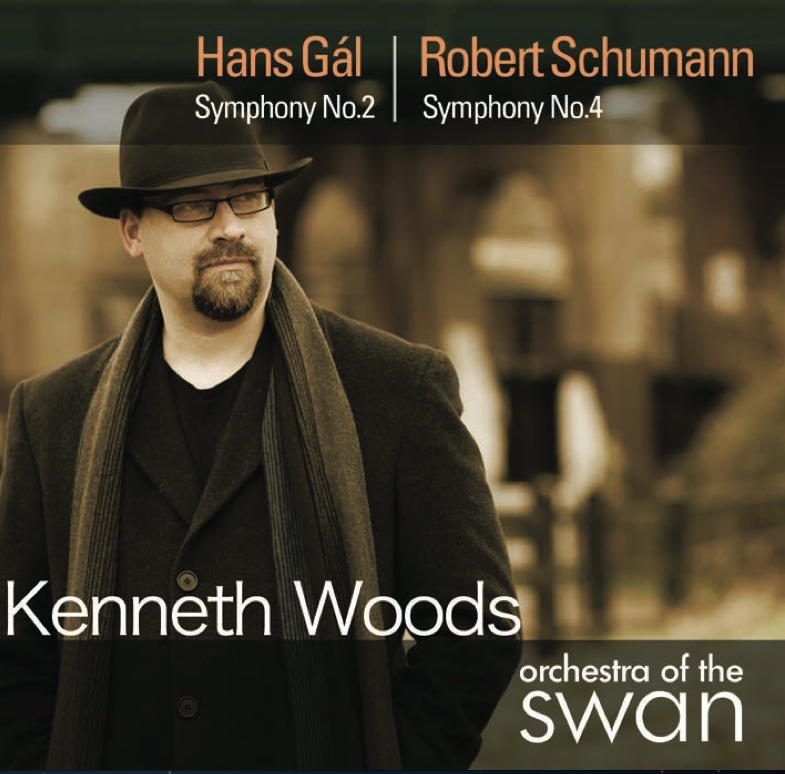
Many folks have raised an eyebrow when I tell them I have chosen the 2nd Symphony of the great Bobby Schumann to end my run at the Oregon East Symphony.

“What,” they say, “no Mahler 9, no Beethoven 9, no Bruckner 9?”

No, no 9ths!

Here are Five Easy Reasons why I’m going out with a bang with Bobby.


1-       It is as perfect a symphony as ever written, and as good a candidate for the best symphony ever written as you are going to find.

2-       I’ve never done a Schumann symphony in Pendleton, and that cannot be allowed to stand.

3-       I ended my tenure with the Grande Ronde Symphony with Schumann 4, so I can make it my policy now to terminate all music directorships in Eastern Oregon with a Schumann Symphony.

4-       The piece explores profound themes of hope, redemption and love that I think are somehow relevant to my own life experience during this long chapter of the book of being Ken.

5-       It rocks. It will kick you apart. It stands 11 feet tall, weighs 600 pounds, eats whole rhinos for breakfast, smells like roses, drives a thousand miles an hour up hill, pays your taxes for you, changes babies, walks dogs, lifts hearts, destroys prejudice and restores promise.

Here is an earlier blog post that explores just one aspect of this amazing piece. 

http://kennethwoods.net/blog1/2008/06/20/schumann-and-bach-in-the-2nd-symphony/

I suppose my biggest concern is that this is our first Schumann symphony together. I can’t tell you how far we’ve come at the SMP by working through so much of his music. The learning curve is huge, even though everything you need to know is there in the music. Schumann’s music doesn’t need help, it needs rescuing from those who would help it. People have read so much crap about him, his mental stability, his orchestration and his conducting that they either ignore his markings, which seem to be all perfectly logical and incredibly effective in this piece, or they start changing things without first making an honest effort to realize his intentions. If I can get the band to take his markings just as seriously as they take Mahler’s, I think we’ll have a fine show on our hands.

  • Share/Bookmark

A view from the podium , , ,

The Final Program- Gotterdammerung

October 22nd, 2009

Every concert has its drama.

Not long ago, the drama was a plague of flies, which, last I heard, were still annoying the citizens of swish Altrincham.

As I drove into Pendleton yesterday, I was struck by the vast devastation of the outer reaches of the city. The whole network of main roads connecting the interstate to the heart of town were torn up. It looks like a war is on. Huge diggers ripped loose giant slabs of asphalt to be carried away in waiting dump trucks, to be piled on a mountain of rubbish behind the local Wal-Mart.

Redneck Gotterdammerung

On arrival at the orchestra’s home, the Vert Auditorium, I was further struck by the precariousness of life in Pendleton. Should I have been surprised? I think not- in years past, our offices have been razed, our libraries reduced to ashes. No random destruction is too great, no pointless injustice to extreme to happen within this cozy burgh.

Now, our Hall was little more than a construction site- some wise engineer had condemned the fly system in the theatre. Our acoustic ceiling above the stage, at best a barely-effective death trap, had been condemned and removed, but the promised reinforcements and repairs had yet to appear, and won’t do so until after my tenure here reaches its grizzly end on Saturday. How much of Bobby Schumann’s genius will be lost when all those timbres are heard only by the timbers of the roof when the sound floats up rather than pours out on Saturday?

Then, there is the plumbing.

It is a time honored tradition, now reaching its end, to save any and all bad news for after Ken’s arrival.

With that in mind, I listened somewhat wearily as I was told of pipes blocked and pipes leaking, of corrosion, leakage (what a vile word!) and collapse. As the waters of the local aquifer threatened to drown our modest concert hall, a fateful decision was made- the City would re-plumb the entire building in time for our final concert. When I arrived on Tuesday afternoon, a team was working feverishly, replacing fixtures, pipes and insulation around sinks, johns and water fountains alike. The steam heating in the office was working for the first time in many weeks.

But, on Wednesday, dark clouds gathered. Nary a hairy man-cleavage was in sight. Hours, and then a day went by without any sign of progress, or, of effort. I finally implored Lisa-Marie to call the City and remind them that destiny awaits us all- there is a concert in this building in 72 hours, and one thing classical fans demand at every concert in every venue is plumbing. Peeing in a field is for rockers. Classical fans don’t do port-a-potties.

Will we have running water? Will those toilets and sinks be re-connected again to the walls that have housed them for so many years? Will the floorboards rot from seepage, or our ceiling collapse? Will our more elderly patrons have a place to answer Nature’s most urgent call?

Oct 09 019

Anything is possible in Pendleton. Readers often comment on the ambition of our many Mahler concerts, but Carmen was in many ways the biggest project we ever did here- an army of soloists, children’s choirs and grown up singers joined the band that week. The day before the performance, a City engineer, without warning, condemned our stage extension, then in use for 11 years. He threatened to wrap our esteemed venue in yellow “condemned” tape- can you imagine Carnegie in such a predicament?

But Pendleton can rally- in all of fifteen minutes a team of men, none paid nor looking to be, arrived with saws, power drills and lumber. Within one hour, they had rebuilt the extension to code, not because they owed us a favor, nor because we could pay them for their time, but because this is Pendleton, and that’s what you do here. You answer the call. You fix what needs fixin’. Miracles can happen here.

Still, with destruction and delay all around today, I find myself fantasizing about a truly Wagnerian finale to my Pendleton adventure.

We are finishing Schumann 2 in a blaze of glory, when the ceiling finally collapses, the walls of the ancient auditorium crumble and the long-defective plumbing explodes with pent-up rage. Great geysers of tap water and raw sewage  explode from half-plastered walls in as-yet-un-re-opened bathrooms.

Meanwhile, the brass section is building a great, raging pyre of violins, pianos, contra-bassons, stage-flooring-saturated –in-the-blood-of-the-conductor and pops charts, and, shrieking the battle cry of the Valkyires, I slide the Ring onto my finger, wave to those sexy Rhinemaidens, don my brass brassiere, mount my noble steed Grane, and ride to my immolation on the shore of the raging river of who-knows-what, as the walls of Valhalla itself fall forever into the raging inferno.

Wouldn’t you want to see that?

7:30 PM this Saturday, Vert Auditorium.

Tickets on sale at Armchair Books and the OES office.

  • Share/Bookmark

A view from the podium , , , ,

Live blogging a concert- SMP at the Electric

September 26th, 2009

It was a fine evening of music with the SMP- Schumann and Haydn make for a very good pair anytime they appear on the same program together. Both criminally under-rated, both great inventors and innovators, both with supreme wit…

On top of this, they both seem masters of those moments that make you want to stop in the middle of the concert (or even just 10 seconds before the end of the concert!) and say “did you hear that!?!?!?!?! That is pure genius! Let me show you what Haydn just did! Let me show you what wonders Schumann has tucked away in the texture here.” There are so many moments of magic in these pieces that probably get missed on first, second and tenth hearing.

Read more…

  • Share/Bookmark

A view from the podium, Haydn, Nuts and bolts , , , , ,

Bobby’s 4th

June 10th, 2009

I have to say that, exhausted as I was coming to rehearsal from Heathrow after my flight back from Boston, I could hardly hide my glee as the SMP and I read the first movement of Schumann 4 on Monday night. It went so well, I almost complimented them, but that’s bad luck (for instance, the most important thing advice I can offer any conductor is never to praise or criticize a horn player until after the concert). We’ll save compliments for a safer hour (although I know several will read this before rehearsal tonight).

My glee is due to the fact that with more than half our Schumann exploration now behind us, I could really feel that first rehearsal was proof positive that we have accomplished something together in terms of learning the grammar of Schumann’s music language. Having just done another Schumann symphony with a fine orchestra who have done almost nothing by Bobby S in recent memory, it really hit home how much I had had to explain and ask for with the other band, and how much the SMP were doing right off.

So what is the key playing Schumann well?

It’s depressingly simple- play it like the great music it is. All the complete and total condescending and inane crap we’ve all heard about Schumann’s orchestration, sanity and supposed weaknesses as a composer means that most musicians, completely without malice, read his music with terribly low expectations. They disregard dynamics and tempi, and don’t throw themselves into the music as they would if it was Beethoven or Brahms. Not long ago I did a Schumann work with a guest timpanist, nice guy, who asked me about possible note changes saying “well, we all know Schumann was pretty careless with timpani notes.” WTF?!?!?!??!?! The result is grey and grim playing and tedious rehearsals, all of which reinforces those same sad, wrong preconceptions. Last night the SMP ripped into the piece as if they fully expected it to be great, and why shouldn’t they? Our last 2 Bobby S symphonies left the audiences screaming and hollering.

So, the secret to being a Schumann specialist is to trust him and take what he wrote seriously. No secret insight is required. Likewise, I remember vividly studying Bloch’s  Schelomo with Parry Karp, who is in my opinion, the world expert on Bloch’s string music. I was so excited to find out the “secret handshake” of Bloch playing, which turned out to be playing exactly what the dead guy wrote in the score. The results were stunning! Depressingly, many teachers seem to think that holding out the notion that somehow they are the keepers of secret knowledge not in the score is often the norm. They put power over their students ahead of teaching the truth of the music.

I mentioned yesterday that we are playing the first Leonore Overture (no. 2) on the same concert, giving us a chance to juxtapose two pieces that were famously revised. The original version of Schumann 4 has come back into fashion in the last 15 years, and has been recorded many times. It’s quite interesting, but as so happens with Schumann, the re-emergence of this version has been used as a new hammer with which to beat the reputation of the great Bobby S.

Anytime a piece exists in more than one version there are bound to be things in the original that, on their own, are cooler than in the revision. Usually, when they disappear in the revision it is because they caused problems for the piece as a whole- perhaps they overpowered what was to come, or revealed too much of where the music needed to go, or brought the form to a halt. For instance, Leonore 2 is full of things that are extremely cool but demand incredible concentration from the audience- like the vast silences after the ff chords in the introduction. I think one night with a coughing, shuffling audience probably convinced Beethoven that he needed to fill those gaps, but in the concert hall or on recording, the effect can be stunning. Also, the piece was too dramatic and complete to serve as a prelude to the opera which followed it.

That said, I find it remarkable how much better the revised version of Schumann 4 is- not because I expected Bobby to botch the re-write, but because the new, trendy view seems to be so solidly that the original is in some ways better (this started with Brahms, who was also badly wrong about the Violin Concerto- many of the misjudgements about Bobby come from his 3 closest soulmates, Joachim, Clara and Brahms, all of whom were too close to his final illness and badly misjudged the work of his later years).

The fact is that the revision is much more coherent, powerful, focused and lucid. The transitions all work better, the counterpoint is stronger, the sense of direction more compelling. I last did this piece on my final concert with the Grande Ronde Symphony. It’s placement on a momentous night of my life tells you something of how much I love it, but I still long considered it a slightly lesser work than the 2nd and 3rd symphonies. Now I’m not so sure- like Brahms, it’s almost impossible to pick the best Schumann symphony. The D minor is intentionally slight in some ways (he considered calling it Symphonic Fantasy), but somehow it’s structural tautness means that the whole is far more than the sum of the parts. Where the 2nd is truly epic, the 4th moves ahead with almost cinematic alacrity, which meant the cumulative energy of the symphony is titanicly explosive.

Most stupidly, many critics (following Brahms misguided lead) seem to think that the orchestration of the revision is inferior to that of the original. Both versions are beautifully orchestrated, but the revision is clearly better. Schumann wanted a bigger, more robust sound, and he got what he wanted. Schumann was an early Romantic composer- orchestration had not yet attained the status of almost a separate art that it would once Wagner arrived, but his imagination is astonishing. Remember, we just did the Konzerstucke for 4 Horns last month, which, considering the valve horn was a brand new invention, is quite simply the most creative and effective writing for horn quartet in musical history. The 4th is full of great orchestral moments, particularly his compelling dramatic use of the trombones at the key moments of the piece, as well as the wonderful colors in the Romanze, particularly the mixture of solo cello and oboe, and the beautiful violin solo in the b section. Karajan got it- he made a point in his recordings of all the Schumann symphonies not to re-touch anything. The results speak for themselves.

Too often, though, the audience doesn’t get to hear what a good conductor can see on the page because conductor and orchestra approach Bobby’s orchestration with scandalously low expectations, and they get what they were after. When we play a Mahler symphony or a Strauss tone poem (or even a Beethoven overture, whose orchestral writing is far more problematic), we expect the orchestration to be great, and that translates into a kind of hyper-energized playing that brings the musical content vividly to life. Schumann deserves the same treatment, and now SMP seem to get that- they’re playing it with the swagger that comes from knowing that the audience is going to go berserk for it. Fun.

  • Share/Bookmark

A view from the podium, Mahler, Nuts and bolts, Performing Life

Schumann’s hidden masterpiece

September 20th, 2008

In exactly one week, the Surrey Mozart Players will take the stage for our first concert of the season, featuring a work that has become very dear to me these last few weeks as I’ve come to know it well, the Violin Concerto in D minor of Robert Schumann.

As regular readers will know, the SMP is in the midst of a multi-season survey of the major works of Robert Schumann- we’ve recently done the concertos for piano and cello and the 2nd and 3rd Symphonies as well as some shorter works. Later this year we’re playing the Konzertstucke for Four Horns and the Fourth Symphony (final version). When this project first came to mind, I knew the violin concerto would have to be part of it, if only because, after a lifetime as a professional musician, I had yet to hear a live performance of it.

In fact, it was nearly lost to history completely thanks to the intrigues of Joseph Joachim, for whom it was written. Schumann wrote it in 1853 and Joachim read it with his orchestra that year, but had not learned it properly, and claimed his arm was tired from conducting (I’ll remember that one for my own use). He promised to give Schumann a better hearing, admitting “I did it such injustice,” but despite repeated promises to play it to Schumann at the asylum in Endenich, Schumann never heard it again. Joachim did occasionally read parts of it with colleagues, and played the piece through with Clara Schumann in 1855 in celebration of the Schumann’s 15th anniversary.

However, Brahms, Joachim and Clara eventually came to the conclusion that the Violin Concerto was a failure- Joachim went so far as to use phrases like “mental lassitude,” “bewildering passages,” “morbid brooding,” and “tiresome repetitions.” Together, the three decided the piece should never be published, and the manuscript was finally bequeathed by Joachim to the Prussian State Library with the stipulation that it not be published until 100 years after the composer’s death.

It was Joachim’s niece, Jelly d’Aranyi (for whom Bartok wrote both of his violin sonatas and Ravel wrote Tzigane) who first brought the lost concerto to the world’s attention. An avid spiritualist, she claimed Joachim had told her about it in a spiritual visitation. In the end, however, her Jewish heritage meant she could never give the first performance in Germany in 1937. Instead, the utilitarian Georg Kulenkampf premiered the piece, but with cuts and with the solo  part extensively re-written by Hindemith (whose contributions had to remain uncredited because he had since become labeled as a degenerate musician by the Nazi state).

The first performance of the score as Schumann wrote it was finally given a month later by Yehudi Menuhin , first in a violin and piano reduction at Carnegie Hall, then with the New York Philharmonic under another great violinist, Georges Enescu.

Since 1937, the work has had its champions, notably Joshua Bell and Gidon Kremer in recent years, but it remains a rarity. Even now, there is no full score available(UPDATE- as of 10.10.2009 Breitkopf has finally published a new Urtext edition of the work, which is wonderful news), only a pocket score. As I’ve gotten to know the piece, I’ve found that I completely disagree with Brahms, Clara and Joachim- it’s a wonderful, deeply moving piece, although I think that had Joachim come through on his promises of a premiere while Schumann was still well enough to hear it, he might have made a few small revisions.

Its continuing neglect may be the lingering effects of a painful birth. Perhaps the piece was a reminder of a painful time that the three friends wanted to forget- there is too much great music in it for them to have mistaken it so badly otherwise. Critics and commentators have always been tempted to outbursts of rare stupidity on the subject of Schumann in general, and his late music in particular, and it is very difficult to play for the soloist (Joachim obviously found it too challenging, and this was the man for whom Brahms wrote all his violin music).

On the other hand, I think it will always be music for a special state of mind- like the late music of Beethoven, long passages of it seem to already be part of another world, particularly the almost unbearably tender and fragile slow movement. Like the best late music of many composers, Schumann already seems to be living partly in the beyond.

Though I knew I wanted desperately to program the piece with the SMP, I was doubtful as to whether I could find a soloist- Josh and Kremer are out of our budget and few fiddle players have the time or technique to learn a work that so daunted Joachim and that they may never play again. Impressed by her performance of the Prokofiev G minor Concerto with us two years ago, I asked the young British violinist Alexandra Wood if she was interested in learning an impossibly hard piece she might never get to play again for a very modest fee. To my delight, she wrote back that she loved Schumann and would be delighted to take it on.

The first movement shares some of the rhapsodic and otherworldly qualities of the first movements of the Schumann Piano and Cello concertos, but the key of D minor (Schumann was very conscious of the historical associations of keys in the music of the past, and this movement has references to D minor works including the first movement of Beethoven 9 and the Bach Chaconne) gives the music an extra dimension of  power, existential dread and struggle. The brief slow movement, on the other hand, is intimate and fragile- one of the most beautiful in the repertoire. This is music that lives in a twilight realm of ephemeral visions, longings and hauntings. However, as in the other two concerti, Schumann leaves behind the sensitive and vulnerable side Eusebian side of his nature in the Finale, in which his confident, extrovert and optimistic Florestan persona comes to the fore in a jolly, virtuosic finale that pushes the soloist to the limits of the possible.

KW

Advice for the curious- the best resource on this work I know of is the marvelous essay by my drinking buddy Michael Steinberg in The Concerto, on which I have leaned heavily in writing this.

Here is a brief sample of the slow movement from Joshua Bell’s fine recording- buy it.


  • Share/Bookmark

A view from the podium, Favorite posts, Interactive Program Notes, Nuts and bolts , ,

Schumann orchestration and Mozart tempi….

June 27th, 2008

I have time for just a few quick thoughts before I head off to Chobham for one last SMP rehearsal before tomorrow night’s concert.

Surrey Mozart Players
Saturday, June 28, 2008
7:30 PM
Electric Theatre
Piston- Sinfonietta
Mozart- Sinfonia Concertante
Oliver Heath- violin, Gary Pomeroy- viola

The first thought is a reminder to local listeners to get your tickets today if you possibly can, as the concert was close to sold out on Wednesday, in spite of the fact that we’re doing a work by Walter Piston (hopefully it is partially because of the fact that we’re doing a work by Walter Piston, as it is an amazing piece).

I voiced concerns here on Wednesday about cycles in general, and mentioned that it felt like the first manifestations of cycle-phobia were appearing in this rehearsal sequence. I needn’t have worried- Bobby (Bobby Schumann) has seen us through. The 2nd Symphony has proved to be an irresistible force. All 4 of the Schumann symphonies are great, but the 2nd is the greatest. Much as it might be nice to finish the cycle with the best piece, maybe it is good to put such a miraculous piece in the middle to lift us all on to the final stages of the cycle. When one of our bassoonists asked me “are all his symphonies this good” on Wednesday, all I could say is that all his symphonies are pretty damn good, but……

I asked my colleague in the orchestra what she disliked about rehearsing Schumann and we had a good chat. To my delight, she said she was loving rehearsing this piece and that it was just the scrubando writing in the 3rd she found exhausting.

One can’t rehearse Schumann’s orchestral music without recalling all the many clichés about his problems as an orchestrator. To me, Schumann has one of the great ears for color of any composer. Think of the brass writing in the 4th movement of the 3rd symphony, or the slow movement of the cello concerto where the soloist and the principal cellist of the orchestra link hands for one of the most miraculously beautiful passages in any piece.

Where Schumann is most often faulted is in the area of balance, but poor orchestral balance is not a composer’s fault but a conductor’s, especially in music of this period. Symphonies from Haydn to Brahms were expected by their authors to be played by orchestras ranging in size from 30 to 110 players. Any of these composers would have expected a good conductor to make adjustments- Beethoven himself used alternations of full and reduced string sections in performances of his symphonies with large orchestras, but not with small groups where everyone played all the time. Any 18th or 19th century composer would have doubled the woodwinds, and in some cases even the brass for a performance with a huge string section, but might have reduced the wind dynamics for performances with a small one.

If you hear a Schumann symphony in a 3000 seat modern hall, you are already hearing something Schumann would not have planned for- halls in his day were much smaller than that. It’s up to a conductor to decide the best balance of forces for that space- if you get the right size band on stage, you can make fewer adjustments throughout a piece.

I don’t think of adjusting dynamics within a texture (such as having the brass release a long chord after an attack, or having the first violins play a sustained high note softer so that an inner voice can come out) as making changes- Haydn, Beethoven, Schumann or Mendelssohn would have all expected the performer to do that, as they wrote what they expected the audience hear, not what they expected the players to do, unlike Mahler, who tells the players what to do in order for the audience to hear what he wanted them to. Having 4 oboes play an ff passage instead of 2 is not re-orchestration, nor is changing a string accompaniment of a wind solo from mf to mp in a performance with a huge string section (or, even only using half the section).

Beyond that, I’ve never been tempted to change a bar of Schumann’s orchestration- his ear for color is too imaginative and inspired, and it has just never been necessary. Even with a passage that seems impossible for balance, the price of taking shortcuts is always high. In the last movement of Schu2 there is a passage at bar 134 where the horns and bassoons alternate bars of triplets in a quite noisy texture. The horns are easily heard, the bassoons usually lost- they’re softer by nature than the modern horn and in a weaker register. I just heard a fine recording where the conductor had brought in 2 extra horn players and given the bassoon part to them to solve the problem, but he created bigger problems than he solved. The triplets became quite overbearing, and the lack of variety in the color was clearly un-Schumannian. He should have hired two extra bassoons to double there and changed them to ff and the horns to mf- that is the adjustment Schumann would have expected, and therefore NOT a change…

Finally- we’re rehearsing Mozart’s Sinfonia Concertante for Violin and Viola tonight, which I just conducted last week with the LCO. It is very unlike me to do this piece 2 times in such close succession, as I try to avoid it. Yes, it is beautiful, especially the slow movement, but it seems one of those pieces that is cursed. Most performances I hear have some HUGE indulgences, flaws and fiascos that you don’t tend to hear in other Mozart concertos.

First, more often than not, the soloists are poorly matched or not matched at all. Think of all those performances by an orchestra’s concertmaster and principal violist that simply hammer home the fact that they were born in different centuries, studied on different continents and don’t like each other. Then there is the “reward for good behavior” soloist pairing- when 2 members of the local youth orchestra get to do it before they head off to college where they would have learned how to play Mozart. Then there is the “it’s really a viola concerto” performance- the violist gets so over-excited that they become a little obsessive about the piece and plays insanely loud, while the violinist, flush with 5 concertos of his own, comes in unprepared and undermotivated, skidding all over the string and playing horrible out of tune. This week, we’re doing it with 2 members of the Heath Quartet, which should be a good match.

Then there are the horrible traditions and performance clichés that have been piled on this poor work, ones that have long since been eradicated from most of the other Mozart concerti. All those annoying, un-Mozartian tempo changes in the first movement…. Yuck!

And then there is the poor slow movement- one of the great ones in the literature. It’s just Andante, which, as we all know, doesn’t mean slow, it means walking. Piu andante in Mozart means go faster!

I once got in terrible trouble over a Mozart Andante. I was doing one of the flute concerti, and the soloist’s teacher gave me the video of Galway playing it with the Mostly Mozart orchestra to study. Aside from the heavenly flute playing, it was pretty dire, and the slow movement was beyond funereal. I was sure he didn’t mean me to copy that tempo. We got to the rehearsal and I started the movement at a normal-ish Andante clip and the teacher barked from the hall that it was too fast. In my best nice-guy voice, I said something like “but it is Andante and not Adagio…” Just that, nothing more…The next morning he called my boss and yelled for 20 minutes about my arrogant attitude. My boss then pulled me in and asked me point blank “so how slow did he want you to go?” I played him the tape and he warned me to be more diplomatic in future…

My revenge came about a year later when Emmanuel Pahud did the same piece in town, with a lovely flowing Andante. Well, he’d become the flutist of the day, surpassing Galway by this point, and the next I’d heard the same flute teacher was telling other conductors- “it’s too slow, Andante and not Adagio….” Just goes to say that who says a thing means more than what gets said.

  • Share/Bookmark

A view from the podium , , , , , , ,

Schumann and Bach in the 2nd Symphony

June 20th, 2008

On my desk today is Schumann’s 2nd Symphony. If you had assembled a panel of experts, including every major composer from 1825 to 1899, at the end of the 19th century to pick the most important symphony after Beethoven, Schumann 2 would probably have been the one, beating out all the Brahms, Bruckner, Dvorak, Tchaikovsky and Mendelssohns easily.

One reason the piece was so highly esteemed in its day was that it is what I call a “crafty” piece- that is, it is not only exciting and emotionally shattering music, it is also music that contains an extraordinarily rich array of musical touches of compositional craft.

For instance, the piece is full of ciphers, codes, quotations and references to other music. The master of cipher and quotation is, of course, JS Bach, and, as it turns out, Schumann 2 is the most Bach-ian of the Schumann symphonies, and one of the most Bachian of all symphonies ever written.

Read more…

  • Share/Bookmark

A view from the podium, Interactive Program Notes, Nuts and bolts , , , , ,