Description
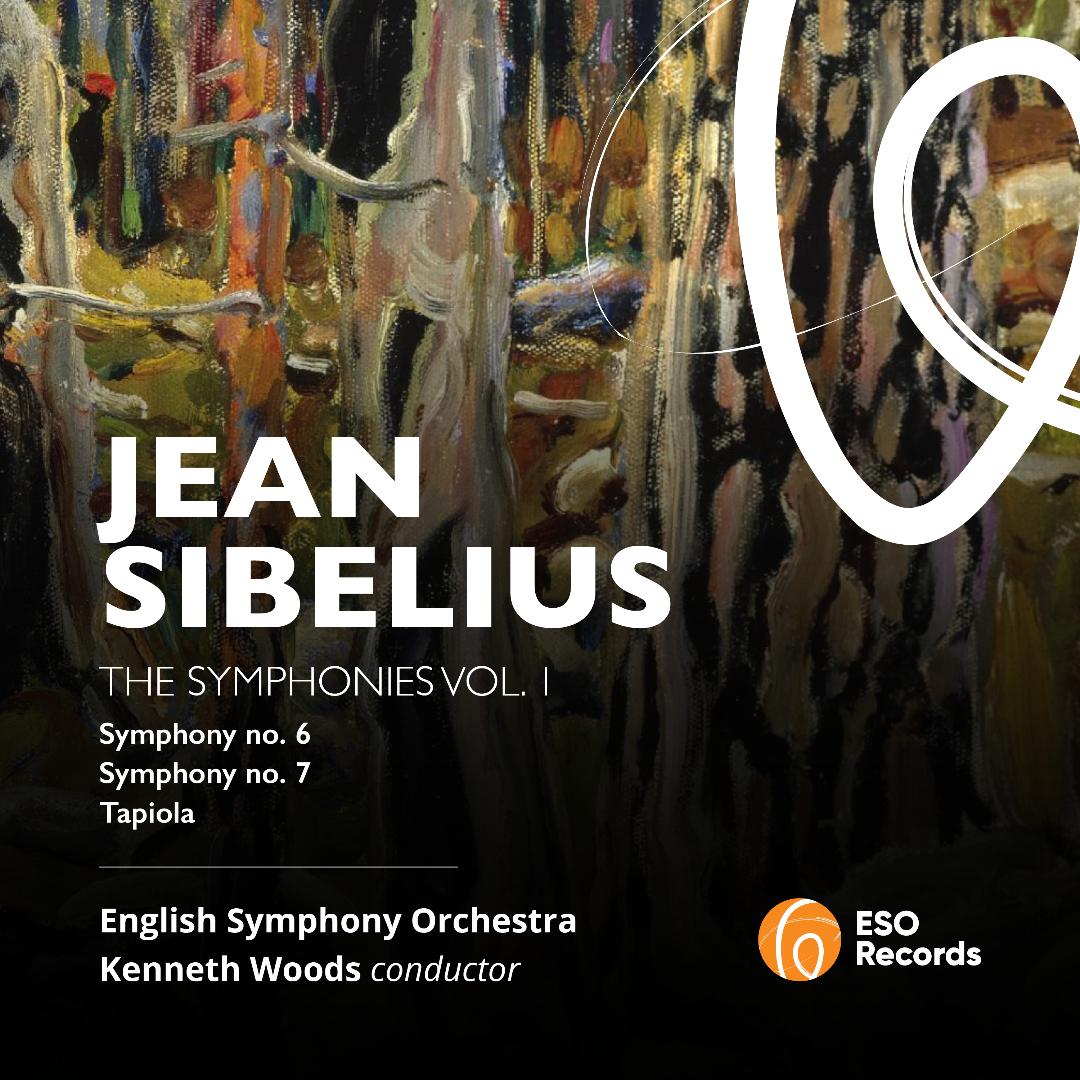
“]This recording features Jean Sibelius’ final symphonic masterpieces, performed by the acclaimed English Symphony Orchestra under Kenneth Woods. Sibelius’ Symphony No. 6 offers serene and understated beauty, notable for its Dorian-mode tonality and ethereal textures. Symphony No. 7 pushes boundaries with its revolutionary single-movement form, seamlessly integrating contrasting sections into a continuous musical arc. Completing the disc, Tapiola, Sibelius’ evocative tone poem, conjures the ancient forests of the North with rich orchestral color and dramatic tension.
Praised for its clarity, insight, and emotional depth, this performance brings out the subtlety and modernity of Sibelius’ late works, making it an essential addition for lovers of the composer and symphonic repertoire alike.
Admin –
Sibelius
The Symphonies Vol 1
Edward Clark
Kenneth Woods has been a committed Sibelian for many years, often working with the English Symphony Orchestra, with whom he has now begun recording the complete cycle plus Tapiola, to be announced.
This first issue sums up his credentials in the daunting task of performing the last three masterpieces; symphonies 6 and 7 plus Tapiola.
Symphony 6 is the strangest of the seven symphonies due to its ethereal sound world, incorporating an almost new unique musical language. This springs from Sibelius’s use of the Dorian mode, which carries with it a mystical element in the listener’s experience. Sibelius was aware of this by not stating the key of D minor on the title page of the score.
To some it is the most endearing of the cycle in its capture of a beauty of tone and serenity of sound. Woods adopts tempi that avoid the haste heard in recordings by Beecham and Colin Davis and the general stupefaction that inhabits most if not all the recordings made by Finnish conductors. To me, this ability by Woods to project Sibelius’s unique luminosity places his performance among the elite group of available recordings of this truly magical work.
True to form Sibelius challenges his listeners as to what to expect in the symphony that follows its predecessor.
Here it may be prudent to explain that all the last three symphonies were in Sibelius’s plan before 1918. He had yet to define the final outcome of the Fifth Symphony, the Sixth was to be a Fantasia II and the Seventh began as a three movement, becoming four movement work before the final single movement work emerged as if out of nowhere. While there remain remnants of the earlier multi-movement form, the genius of the final work set the cat among the pigeons for future generations of composers who have sought to capture Sibelius’s ability to unify different musical movements into a satisfying whole.
Many recordings fail to achieve this sense of unification. Woods rises to the challenge with his grasp of the essential ingredients needed to reach a truly satisfying conclusion. The route he takes allows for an inspiring experience where our emotions range from the beauty of the opening polyphony (Sibelius knew his history from the Reformation/Renaissance era during his early student studies) through all sorts of challenges set before us with the emergence of the noble trombone theme that unifies all the disparate elements that follow. His command of the score is thorough and inspirational. It is not always that I cry at the very end where the pizz on the strings (often obscured in many recordings but absolutely vital) heralds the last four bars. But Wood’s concluding throw of the dice settles everything that has gone before; powerful and final.
Two years separate the Seventh Symphony with Tapiola, the last major work Sibelius composed in 1926 to a commission from Walter Damrosh and the New York Symphony Philharmonic Society orchestra. The thought of Sibelius sunning himself in Capri while sketching the work takes some believing but he adored Italy above all other countries he visited.
The range of recordings’ timings is the widest of any major work Sibelius composed. Berglund’s last recording takes a little over 14 minutes. Karajan takes over twenty minutes. Wood’s takes just over 17 minutes which is fine with me. There needs to be an initial impetus, formed from both sound and tempo, allowing the very opening to provide the emergence of the terrors that follow to be properly experienced. Woods settles on this journey with belief and having confidence in the nature of the monothematic score. Regarded as Sibelius’s last great gift to music Tapiola is a hard nut to crack on a superficial level with long stretches of seemingly similar music that remain unvaried. Woods command of his resources, including rarities for Sibelius such as piccolo, cor anglais, bass clarinet and contrabassoon, ensures we are aware of Sibelius’s amazing scoring that culminates in the terrifying storm, the like of which is unique in all music.
Tapiola remains a core work of study among many avant-garde composers for its mixture of motifs and texture that coalesce into a strange world that embraces colour and structure together. Woods’ performance is as good as any I know; a remarkable achievement that truly embodies Cecil Gray’s earlier affirmation:
“Tapiola is the culminating point of his entire creative activity, and a consummate masterpiece. Even if Sibelius had written nothing else this one work would be sufficient to entitle him to a place among the greatest masters of all time.”
Kenneth Woods –
John Quinn, Editor. MusicWeb International
https://musicwebinternational.com/2025/12/sibelius-symphonies-no-6-no-7-eso-records/
Jean Sibelius (1865-1957)
Symphony No. 6 in D minor, Op 104 (1918-23)
Symphony No. 7 in C major, Op 105 (1923-4)
Tapiola, Tone Poem, Op. 112 (1926)
English Symphony Orchestra/Kenneth Woods
rec. 2021/22, Wyastone Concert Hall, Monmouth, UK
ESO Records ESO2502 [65]
This CD is badged as ‘The Symphonies Vol 1’. The works concerned represent, arguably, a slightly unusual starting point for a Sibelius cycle – often, conductors begin with one of the first two symphonies or with the Fifth – but, as we shall see, the chosen works play to the strengths of the English Symphony Orchestra. As I noted when reviewing the orchestra’s recent release of Elgar’s First Symphony, the ESO’s string section isn’t as large as is the case with many orchestras: on these recordings the strings are 8/6/4/4/2 (and 8/6/4/4/2 in the case of the Seventh Symphony). At the risk of making an obvious point, that means that these performances offer a different experience as compared with recordings by, say, Sir Colin Davis, Karajan or Vänskä; inevitably there’s less tonal weight in the string choir, but there are benefits in terms of textural clarity.
That characteristic is most apparent in the case of the Sixth Symphony. As the first movement unfolded, I was struck by the purity and transparency of the textures. In his booklet essay, Guy Rickards cites this as a case where “less is most definitely more”; he’s referring to the work itself but I think the comment could also apply to the performance. Just as I liked the textural clarity so I also liked the intelligent way that Kenneth Woods paces the music. When the brief climaxes arrive in the first movement, the ESO doesn’t short-change the listener. These virtues carry over into the second movement which, in this performance, seems to develop seamlessly from its predecessor. In the quick central section of the movement, I admired the excellent, crisp playing of the woodwinds. There’s also crispness to appreciate in the brief Poco vivace third movement. Here, Woods and his players display a lightness of touch which is just right for the music. The introduction to the finale is ideally measured in pace and when the main body of the Allegro molto is reached (2:00) there’s energy and deftness in the playing, yet one also notices the darker undertones in the music. As the symphony more or less comes full circle in the closing two or three minutes we can enjoy once more the clarity of texture with which the symphony began. I enjoyed this account of the Sixth.
In the booklet, someone has gone to the trouble of listing all the tempo indications in the score of the Seventh Symphony. There are no fewer than fourteen of them, which demonstrates the skill required of the conductor to present the music seamlessly and coherently. I think Kenneth Woods gets all of this absolutely right; the transitions are smooth and the pacing of the various elements seems to me to be ideally judged. The three interventions by the principal trombone are key staging points in this symphony and here the player (Julian Turner) does a fine job. His first solo (tr 5, 4:55) is noble and it helps that Woods has made the lead-up to the trombonist’s intervention both impressive and inexorable. A little later, the scherzo-like episode is nimble and clear, the music well controlled. The passage that includes the second trombone solo (tr 6, from 1:14) is darkly imposing. The next time we hear from the trombonist, he ushers in the main climax of the piece, which here has suitably craggy grandeur (tr 8, from 1:06). All in all, this is an impressive traversal of this compressed symphonic masterpiece.
Tapiola also fares well. I like the subdued tension at the very start; thereafter, Woods builds the tension very successfully in the Allegro moderato section. As with the Sixth Symphony, there’s excellent clarity of texture; perhaps it’s not coincidental that the two works were recorded in the same sessions. I think I’d characterise the approach to the music as lean; there’s certainly a sense of Northern winter about the music as we experience it here. Though the performance may be lean in overall style the dramatic climax from 10:50 is powerfully delivered, with braying horns and plenty of impact from the trumpets. A little later, the storm begins in the distance (13:44) and as it swirls closer and then around the forest you can certainly feel an icy blast. The performance ends quietly; the forest has survived the battering from the storm and continues its remote, forbidding existence.
These are very good performances; I enjoyed all three of them. The orchestral playing is very good and Kenneth Woods shows that he is an idiomatic, understanding Sibelian. This is a successful launchpad for the projected Sibelius cycle. The recorded sound achieved by producer Phil Rowlands and engineer Tim Burton is very good.
I think I should mention that there are a couple of presentational issues, one a minor slip, the other a bit more important. The minor one is that Tapiola is listed as Op 12; that’s just a small typo. More seriously, the track listing (reflected in Guy Rickards’ very useful notes) indicates that the Seventh Symphony is presented as a single track. In fact, it’s divided into four tracks. That’s much more helpful to the listener; however, since all the tempo modifications have been listed in the booklet – again, helpful – it would have been of great assistance if the track dividing points had been shown.
John Quinn
Admin –
Reviewed by Richard Whitehouse, Arcana FM
https://arcana.fm/2025/08/10/eso-woods-sibelius/
What’s the story?
Good to find the English Symphony Orchestra issuing the follow-up release on its own label (after Elgar’s First Symphony and In the South), launching an ambitious project to record all seven symphonies and Tapiola by Sibelius prior to the 70th anniversary of his death in 2027.
What are the performances like?
Only if the Sixth Symphony is considered neo-classical does it feel elusive, rather than a deft reformulation of Classical precepts as here. Hence the first movement unfolds as a seamless evolution whose emotional contrasts are incidental – Kenneth Woods ensuring its purposeful course complements the circling repetitions of the following intermezzo, with its speculative variations on those almost casual opening gestures. Ideally paced, the scherzo projects a more incisive tone which the finale then pursues in a refracted sonata design that gains intensity up to its climactic mid-point. Tension drops momentarily here, quickly restored for a disarming reprise of its opening and coda whose evanescence is well conveyed; a reminder that Sibelius Six is as much about the eschewal of beginnings and endings in its seeking a new coherence.
A decisive factor in the Seventh Symphony is how its overall trajectory is sensed – the ending implicit within the beginning, as Sibelius fuses form and content with an inevitability always evident here. After an expectant if not unduly tense introduction, Woods builds the first main section with unforced eloquence to a first statement of the trombone chorale that provides the formal backbone. His transition into the ‘scherzo’ is less abrupt than many, picking up energy as the chorale’s re-emergence generates requisite momentum to sustain a relatively extended ‘intermezzo’. If his approach to the chorale’s last appearance is a little restrained, the latter’s intensity carries over into a searing string threnody that subsides into pensive uncertainty; the music gathering itself for a magisterial crescendo which does not so much end as cease to be.
Tapiola was Sibelius’s last completed major work, and one whose prefatory quatrain implies an elemental aspect rendered here through the almost total absence of transition in this music of incessant evolution. A quality to the fore in a perceptive reading where Woods secures just the right balance between formal unity and expressive diversity across its underlying course. Occasionally there seems a marginal lack of that ‘otherness’ such as endows this music with its uniquely disquieting aura, but steadily accumulating momentum is rarely in doubt on the approach to the seething climax, or a string threnody whose anguish bestows only the most tenuous of benedictions. A reminder, also, that not the least reason Sibelius may have failed to realize an ‘Eighth Symphony’ was because he had already done so with the present work.
Does it all work?
Pretty much throughout. Whether or not the cycle unfolds consistently in reverse order (with a coupling of the Fourth and Fifth Symphonies having already been announced), this opening instalment is the more pertinent for focussing on Sibelius’s last years of sustained creativity.
Is it recommended?
Indeed. The ESO is heard to advantage in the spacious ambience of Wyastone Hall, and there are detailed booklet notes by Guy Rickards. Make no mistake, these are deeply thoughtful and superbly realized performances which launch the ESO’s Sibelius cycle in impressive fashion.
Admin –
Karl Nehring, Editor – Classical Candor
https://classicalcandor.blogspot.com/2025/11/recent-releases-no78-cd-reviews.html
Sibelius: Symphony No. 6 in D Minor, Op. 104; Symphony No. 7 in C Major, Op. 105; Tapiola, Op. 12. English Symphony Orchestra; Kenneth Woods, conductor. ESO Records ESO2502
I believe my first encounter with a recording featuring the conductor Kenneth Woods, originally from Madison, Wisconsin, but currently residing in Wales, was a Nimbus release of symphonic music by a contemporary English composer previously unknown to me, Matthew Taylor (b.1964), a review you can find here. Since then, I have gone on to review other recordings conducted by Maestro Woods, who leads not only the English Symphony Orchestra featured on the present recording but also serves as Musical Director of the world-famous Colorado Mahlerfest; in addition, John Puccio has reviewed numerous recordings led by Maestro Woods in past installments of Classical Candor. On this present Sibelius release, the ESO under Woods acquit themselves admirably. It is hard to think of a more satisfying musical program than that presented here, the final two symphonies by the Finnish master plus his magical tone poem, Tapiola. There is something magical about the way in which the opening notes of the Sixth Symphony blissfully arise from silence; we suddenly find ourselves in a wondrous world of sound and shadow that Woods and the ESO bring to life with a deft touch. The overall sound seems just right for Sibelius – not too heavy, but not too light. The recorded sound is clean and open, and there are informative liner notes by composer and critic Guy Rickards. All in all, this is a highly recommendable release.
Admin –
From Gramophone Magazine February 2026
By Andrew Achenbach
Sibelius – ‘The Symphonies, Vol 1′ Symphonies No 6 in D minor, Op 104; No 7 in C, Op 105. Tapiola, Op 112 English Symphony Orchestra / Kenneth Woods ESO Records (ESO2502 67’)
JEAN SIBELIUS
The performance of the Seventh Symphony first appeared as a webcast towards theend of 2021. It impressed me enormously at the time, and returning to it in the present context I find my enthusiasm undimmed. Kenneth Woods presides over a reading of laudable diligence and contagious dedication, his conception a nobly intense, unhurried and coherent whole. Transitions are negotiated with judicious skill, and the resulting journey yields immensely satisfying rewards. There’s some deftly responsive work from the ESO woodwinds in particular and how adroitly Woods observes the Poco a poco meno moderato marking from 7 before fig P all the way up to the Vivace at 13 after U (listen from 0’56” into track 7 to the start of track 8).
Both the Sixth and Tapiola were set down the following year and display comparable virtues, the playing unfailingly eloquent, textures agreeably luminous and the interpretations evincing a sure sense of purpose. I appreciate the unvarnished honesty and inexorable thrust of this Tapiola, its howling tempest and ensuing threnody attaining a genuinely arresting pitch of intensity. The Sixth likewise comes off very well, an immersive, thoroughly involving display, considered, tasteful and entirely free of self-conscious gloss; indeed, the work’s radiantly cathartic closing pages are deeply moving in their
limpid purity and compassionate warmth. Sample, too, the Poco vivace scherzo, where the insistent rhythms have a delectable point about them and how good to hear more of Sibelius’s distinctive harp-writing than is often the case (ditto those dancing timpani in the finale, for that matter). No doubt about it, Woods is an accomplished Sibelian, and these are refreshing accounts I have already returned to with pleasure. There can be no grumbles with Phil Rowlands’s expert production values; Guy Rickards supplies an erudite booklet essay. More Sibelius from this partnership, please! Andrew Achenbach