nopr: Does Science Really Need Scientists?


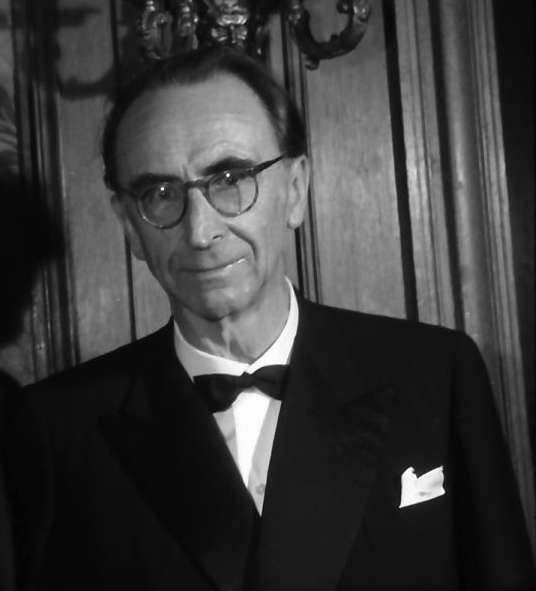
Does this guy matter. Albert Einstein thinking science stuff I don’t really understand

Have you ever wondered whether scientific scientists actually influence their science experiments?

They seem important. After all, they’re standing in the middle of the lab wearing white coats and goggles, doing stuff, giving instructions, waving their hands and pressing buttons. But the science machines are all connected to computers that are telling them what to do. If you took the scientist away, could the laboratory do science on its own?

Apparently, this guy did matter when he was still alive according to previous studies


Following on the heels of a recent scientific study of conductors’ influence on the orchestras they conduct, a team of scientists at Moronton University led by Dr Osmosis Los Alamos has conducted a similar survey, studying the impact being a scientist has on doing science.

“Having conclusively proved that being a trained, experienced and competent conductor makes you better at conducting, we wanted to do the necessary, ground-breaking, grant-funding-attracting research to needed to scientifically assess whether basic competence matters in other fields of endeavour, and we decided to start with the field we know best.”

Researchers set up two identical sciencing labs to run an experiment to measure the specrtra produced by super-heated ionic gas clouds using a device called a microwave spectrometer. Each lab was fitted with numerous motion sensors, remote cameras and lab computer activity was tracked remotely.

When the scientists started the experiment, researchers watched to see which team got the best results, who used their time the most effectively, which team caused serious accidents, explosions or fires and which team needed the most or least hospitalization. Researchers also tracked which lab produced the most graduate research assistant fatalities and which computers were used primarily for analysing incoming experimental data, and which were used primarily to access pornography. Using mathematical techniques originally designed by Nobel Prize-winning economist Percy Granger, Los Alamos and his colleagues analysed whether the actions and expertise of the scientists were linked to the effectiveness of the experiments.

The researchers hypothesized that if the actions of the scientists could predict the effectiveness of the experiment, then the scientist was clearly running the lab. But if the scientists’ actions could not predict the progress of the machines, then the experiment was running itself.

(The research study is part of a larger project where Los Alamos is trying to figure out if human activities share something in common with knowing what you are doing. Future studies will focus on how being able to snow peer-review committees under mountains of bullshit and a very effective PR outreach can lead to increased grant funding of pointless research projects)

But the study found more: The researchers had two scientists give the same lecture on advanced quantum mechanics. One was a veteran university professor who possessed an ironclad understanding of the material. The other was an idiot.

“What we found is the more the influence of the science professor to the science students, the more education — educationally effective the lecture was overall,” Los Alamos said.

Science experts who listened to the lecture of the students under the control of the two speakers found the version produced by the person who actually knew anything about quantum mechanics to be educationally superior. Remember, these experts didn’t know which version was being led by the veteran science professor, and which by the idiot. All they heard was the lecture.

Next up will be a study about whether journalists with a technical background in the field they are writing about produce more informed articles about the subject they are covering than those whose expertise lies elsewhere.

Share

What’s in a name? Depends on whether it’s the right name.

Reformist musicologists with a politically-correct worldview might find themselves raising an eyebrow at this week’s Surrey Mozart Players concert, where, with blatant disregard for all the latest scholarship, the orchestra and I will be playing Johannes Brahms’ “Variations on a theme of Josef Haydn.”

We will not be playing the now-ubiquitous “Variations on the Saint Anthony Chorale.”

Mind you, I’m not arguing against the wealth of research that raises serious questions about whether or not Haydn wrote the Saint Anthony Chorale. (or, for that matter, the Divertimento in which it appeared). Although scholars continue to debate the point, the question of who wrote the theme is not important to me in this case. What is important is who Brahms thought wrote the theme.

Johannes Brahms, not pondering who wrote the St Anthony Chorale

Johannes Brahms, not pondering who wrote the St Anthony Chorale


I’m not comfortable with renaming a major work by Brahms simply because he was unaware of or misinformed about the actual provenance of the theme he was working with. (Perhaps, just to be completely upfront, we should put it in the program as “Variationen uber ein Theme von Jos. Haydn”). Why? Well, it seems clear that Brahms was not just looking for a theme, but for a theme by Haydn. Brahms was a great classicist, who revered Mozart and Haydn above almost all other composers. In his opus 56, Brahms set out to write an affectionate homage to Haydn, and chose the Chorale because he thought it struck a useful balance between offering material that was well suited to the variation form and embodying certain qualities typical of Haydn’s genius.

Continue reading

Share

Busted by the BBC….

I was a little surprised, amused,and very slightly alarmed to see something from my Twitter feed reprinted in the current BBC Music Magazine (September issue- buy your copy today).  I do always try to remember that, unlikely as it seems, people do read these things. Thanks to  BBC Music Mag for frittering away a bit of your day reading my silliness. Much appreciated.

Funnily enough, when I typed that, I’d been practicing about 4 hours without a break, and was sweat-soaked, sore and with very raw fingers. I had every right at that moment to feel like a proper practice martyr.  Seeing it re-posted, I feel like a student back at IU being overheard griping about practicing by one of my teachers.  I feel like I’ve just been busted for slacking.  I can just hear some voice of authority saying “Zee Kennets, zees ist vhy you vill neffer be a really great cellist!”


Anyway, to my colleagues at BBC Music, I now answer: Yes, I know all too well there isn’t…. But there must be…..


Ken practicing till his arm goes blurry


Share

BBC Music Magazine- KW in “Music To My Ears”


I had a nice chat a month or so ago with Jeremy Pound, deputy editor of BBC Music Magazine about what I’ve been listening to with particular interest of late. The results of that chat form part of the “Music To My Ears” feature in the July 2011 issue, in which prominent (!) performers are asked about their listening habits. Joining me on the hot seat this month are pianist Danny Driver and percussion virtuoso Colin Currie. The issue is on news stands now, but it’s really better if you subscribe.

I decided to stick to discussion of other conductors. In a business with so much room for hype and charlatanry, I hope it’s interesting for readers to know which conductors serious musicians take seriously. I don’t generally let myself discuss living conductors here except in very special circumstances, so it’s nice to have a forum to plug two of the exciting talents of our time alongside two of the giants of all time. I also wanted to to mix live exeperience, CDs and radio listening experiences.

Have you heard anything lately that made you stay in the car and listen? Everything but the Music has one such story of falling in love with Schumann 4 in the parking lot of Best Buy here. I’d love to hear your stories of radio experiences so vivid you couldn’t get out of the car.


Share

Historic Time Wasting Milestone: VFTP 1000 Posts!!!

It is with a mixture of pride and sheepishness that I write to call readers’ attention to the occasion of Vftp’s 1000th post. It is a sign of the sheer magnitude of time wasting that has gone into this project since 2006 that it is hard to say definitively which post exactly is the 1000th, as there have been posts which have been temporary and others which have been quietly withdrawn in the name of career prolongation. There have been others that have been so minimal, so crap or so short that they hardly count.

In any case, it’s been a lot of fun thus far, and it is nice to now be at the point where there is so much material here that I will often see posts listed in the “Random Posts” field and not be sure what they are about until I re-read them.

I think Vftp was pretty much the first regularly updated conductor’s blog (many industry “experts” told me that conductor’s must never blog) and I’m pretty sure I’m the only nutcase conductor to have reached 1000 posts (many of my favorite non-conductor bloggers reached this milestone long ago, but conductors tend to be a slot lot). Do I have any wisdom to share for other conductors contemplating a blog? You betcha.  Here are my top-10 “conductorblogging” tips:


10- Don’t blog in pajamas, it just reinforces a stereotype.

9- Don’t blog before the second coffee or after the second martini

8- Never write anything which violates the trust of the musicians or the privacy of the rehearsal process

7- Don’t expect anyone to know when you are joking

6- Remember, anybody could be reading. I remember my shock early one when I realized a couple of very high-powered people were religiously reading. It’s not just your friends and your regular commenters. Also, more people have google alerts for themselves than you would think so if you slag somebody off, they’re almost sure to read it.

5- Everything is a draft- it’s never to late to revise.

4- Try not to put your fist through a window every time you find a typo. Without an editor, it is hopeless. Just keep revising every time you find something.

3- Having the word “conductor” next to your name will always make you suspect to some people. Don’t sweat it, but don’t forget it either.

2- Don’t promise readers anything- nothing seems to doom a future post quite like announcing it before it is written

1- Use the phrase “my Beethoven parts look like a fucking Mahler symphony” as often as you can. (see what I mean)


I’ve also learned not to expect too much reader participation. My attempts at polls and memes have all failed miserably. Still, one keeps trying… I thought it might be a fun way to mark this milestone by asking readers to suggest their favorite posts. Is there a post that you particularly liked or loathed? Let me know.

It does seem painfully true to life that this milestone was substantially postponed due to the technical problems we had here for much of the month of February. To my delight, we’ve moved the blog to new servers at Portland Internetworks, where the technical team are far more capable and cooperative than at our previous home.

I’ve come to like a lot of things about having a blog. First and foremost by far has been the dialogue with other musicians and music lovers. Your comments are a priceless part of this whole enterprise, as are the often far more direct and  even outrageous emails. Please keep them coming.

I also like what all this writing does for my understanding and interpretation of the music I perform. I’ve learned so much from writing here- sometimes putting something into words really helps me crystalize what I am reaching for in a performance.

Finally, it has been incredibly empowering to have this forum and to see it grow over the years. Not being able to post for much of the last month has put into sharp focus just how much being able to put my two-cents worth on the record in a variety of topics has meant to my sanity over the years.

Of course, there are many other topics I wish I could talk about more directly here. A friend recently admitted he didn’t read they blog as much today as back when I used to “dish the dirt” a bit more freely. I guess there will always be things we have to wait  to say until the right time.  Meanwhile, I have to try to make a living, and sometimes too much truth telling makes life tough for the truth-teller.

Meanwhile, make an old blogger happy, and keep reading some of the archival stuff if you haven’t already done so. The one real flaw of blogs is that they way over-prioritize what is being written today over what might be more important and more interesting from last year.

And please, as always, do let me know if there are topics you’d like me to write about.

Thanks for reading!

Ken


Share

“Mahler Comes to Wales” and everywhere else

Mahler is in the air today- I’m on way to rehearsal this evening, and what should I find on my daily check of Norman Lebrecht’s Slipped Disc but a mention of the very concert I’m conducting here in Wrexham

The American conductor Kenneth Woods is about to present the sixth symphony as part of a complete Mahler cycle that is being staged in Wrexham, North Wales.

Now how brave is that?

Mahler wrote the sixth  for the best professionals of his time and collapsed in tears at their inability to achieve the effects he sought. A century later, the technicalities are within the grasp of practised amateurs but the language of the symphony and its embedded ambiguities require more study than hard-working people can usually spare in their leisure hours.

So hats off to Wrexham, and to Kenneth Woods, for their courage and determination. It’s on February 26. Don’t forget the date. The concert is sponsored by Cobalz, makers of an anti-Alzheimer’s drug.

Read the whole thing at Slipped Disc here.

Also arriving on my laptop this afternoon is the cover design for the upcoming Orchestra of the Swan recording of Das Lied  von der Erde and Lieder eines fahrenden Gesellen. Ain’t it pretty? Release scheduled for May on Somm Recordings. The painting is: Nicholas Roerich. “Star of the Hero.” 1936.

Share

Classical Music Magazine on KW and Gal

There is a very nice piece in the current issue of Classical Music magazine on music of Hans Gal and our current efforts to get his music on disc. Click on the scan below to see a full sized (and easier to read) version. Regular Vftp readers will know that the first Gal CD discussed below (Triptych and the Violin Concerti) is available, and well worth a listen. The new disc of Gal and Schumann 3rd Symphonies with Orchestra of the Swan is currently in post-production and scheduled for release on June 6, 2011.

One small correction- my chamber music mentor at the University of Cincinnati in the 1990′s was Henry Meyer, not Viktor Meyer. My debt to Henry is a teacher and mentor is enormous, but it was actually my colleague on the Triptych CD, Annette-Barbrara Vogel, who introduced me to to Gal’s music for the first time.

Share

Holiday blogosphere wrap-up- Lebrecht and Stockinger

Even as we all struggle to break free of seemingly unshakeable holiday lethargy, the blogosphere is coming back to life. In fact, some bloggers have been inspiringly busy over the holidays.

One blogger who has been particularly productive over the break has been the indefatigable dynamo, Norman Lebrecht. His blog, Slipped Disc, has continued to break big news stories like the sad demise of Dilettante Music, while embarking on a special holiday music giveaway. There are 14 free tracks from a wide range of artists and labels now available, offering some invaluable exposure for some fantastically interesting repertoire on some very innovative labels. Norman took a fair bit of stick for proclaiming the death of the classical recording industry many years back- it’s great that he’s making his popular blog part of the solution. You’ll find some great Schumann- one of the under-known violin sonatas, and music for saxophone by Tomasi, a composer completely new to me. Shai Wosner’s coupling of Schoenberg and Brahms made for a nice re-contextualizing of two masterpieces.  There’s lots more- 14 downloads so far.

Of course, my two favorite downloads are fairly predictable- Mahler is represented with a download of the Erwin Stein orchestration of the 4th Symphony in a sparking recording on Somm Records by my friends at Orchestra of the Swan, conducted by my colleague David Curtis. To quote from Mr Lebrecht’s blog “Mahler as you’ve never heard him before…. It has been recorded before, but not very convincingly. This performance, by members of the Orchestra of the Swan, gives a much clearer picture of the essence that Stein (with Schoenberg’s blessing) was trying to extract from the hectic first movement.” The disc is being released by Somm in February, to be followed by my recording of Mahler’s Das Lied von der Erde and Lieder eines fahrenden Gesellen in April.

And I can’t help but delight in the fact that the finale of the Hans Gal “Triptych for Orchestra” from my recording with Northern Sinfonia on Avie also made the cut. Lebrecht writes: ”Gal an Austrian composer, born 1890, who fled the Hitler annexation and settled in Edinburgh, where he was at the hub of musical life until his death in 1987. Never a modernist, Gal held Brahms as his role model and wrote in a tonal manner, with a contemporary, sometimes comedic twist.” Lebrecht’s choice of words is particularly apt- Gal called this sparking tour de force “Comedy” but in between the outbursts of high spirited fun, Gal manages to surprise us with some episodes of heart-melting lyricism. If this taster inspires you to hear the whole disc, which included this Violin Concerto and Concertino for Violin and Strings performed by violinist Annette-Barbara Vogel as well as the rest of Triptych you can buy it here from Amazon.com or Amazon.co.ukMDT or ArchivMusik. Be sure to keep your eyes peeled for the release of Gal’s 3rd Symphony with me and Orchestra of the Swan (coupled with Schumann’s 3rd)- the release date has been set as June 6, 2011.

Elsewhere in the blogosphere, anchor of the Madison music scene Jacob Stockinger made my reminiscences of my performance of the Elgar Cello Concerto with my cello teacher, Parry Karp, his special Christmas blog feature. You can read that here. Jake’s intro is probably more poignant than my share of the piece:

Today is Christmas Day.

Although this posting refers to an event that is now a month old, I have held it until today because I thought it was a wonderful and inspirational Christmas essay in how gifts are not always what we find under the tree or in the stocking or mailbox.

In this case, classical music is the gift, and the teaching and learning involved in it – which is to say friendship – are gifts as well.

So I hope you will enjoy this posting like one of those fascinating Letters from Paris in The New Yorker.

It is about a teacher and his student who are now old friends and performing partners.

It is about the University of Wisc0nsin-Madison School of Music.

And it is about, of course, classical music.

Specifically, it about the UW alumnus, cellist and conductor Kenneth Woods (below), who is based in Cardiff, Wales, and who has gone on to an international career, and about UW faculty member and Pro Arte Quartet cellist Parry Karp who was his teacher and now collaborator. (You can research both men with this blog’s search engine.)

I hope you enjoy Woods’ letter or essay:

Although my Twitterati and FB friends already know about it, Vftp readers may not have been aware of the nice review of that concert with the Abergavenny Symphony, which also included Dvorak’s 7th Symphony and the Prelude to Die Meistersinger by Wagner.

One thing that I particularly like about Jake’s blog is his balance between offering a forum for discussion, criticism and celebration of the vibrant Madison scene with bringing news of the wider classical music world to Madison audiences. With the local papers offering almost no space for cultural discussion, communities everywhere need professional music writers like Jake to keep the discussion alive. This year, he’s added a “Musician of the Year” award, which most deservingly goes to James Smith, conductor of the UW-Madison School of Music. Jim has been the beloved conductor of the Wisconsin Youth Symphony since my last year in high school- I am proud to have been his first principal cellist. One of the best musicians I ever met, he set a standard as a conductor that few people I’ve ever worked with or played under have equalled. Since taking over the UW orchestra program a few years ago, he has transformed the Symphony and Chamber orchestras into two of the finest student ensembles in the country. When I conducted the Symphony Orchestra last season in a challenging program of Wagner, Mahler and Elgar I was deeply impressed by the commitment and preparation of the students. You can hear Jim’s performance of Mahler 6 with the UW Symphony on the School of Music website here. There’s something comforting about the knowledge that even with all the world’s economic and political woes, at any given time, there’s bound to be orchestras like the UW ones that, thanks to the leadership of people like Jim, that are playing better than ever.

Share

Press leftovers- Music I couldn’t live without..

A few months back, I was asked by a music writer for an e-interview on “music I couldn’t live without.” I thought it turned out pretty well, but never got published, so here it is….

What are the pieces you couldn’t do without?

It depends a lot on how you define “do without.” Some of the pieces that are most important to me are not ones I need to or want to hear all that often- the experience of interacting with them is so intense, and it’s so rare to hear a really satisfying performance of the greatest music. These are works that I need to know are out there- if I didn’t know the St Matthew Passion, Beethoven’s op 132 String Quartet  or Mahler 9, I’m not sure I could face life, but I don’t need, or want, to hear them all that often. I don’t think I’ve heard or played the Beethoven in 5 years, but just knowing that the Heiliger Dankgesang is something that I can turn to from my own experience playing it is a source of great comfort.

Which is the one you would (probably) have to keep if all the rest were consumed by fire?

I’ve been trying to give the question a lot of thought. I’m sure the answer changes depending on where I am in my own life. Sometimes, I think it must be something Beethoven 7, or Mahler 2- something really alive and hopeful and joyous. Every once in a while, I need to put on Rite of Spring really loudly and jump around the house like a madman. Schumann 2? However, I guess that if I had to pick one piece I could contemplate and return to for a long time, it might be the Mozart Requiem.

Why? Are they/is it ones you grew up with and have sentimental value, or are they meaningful for some other reason?

Of course, the pieces that have a place in your life are always going to be special. Shostakovich 5 could have been my last piece standing- it’s the first piece of music I can remember listening to as a toddler (okay, a very intense toddler). I feel like it is literally been with me at every turn throughout my life. The 2nd Bartok Quartet is special to me because it is such an extraordinary piece, but also because it is a piece my former string quartet lived with for a long time, and one of those rare pieces where I can say that on our best nights, we climbed that mountain and did it justice.

I’ve known the Mozart almost as long as the Shostakovich. It featured on an LP we had of “The great composer’s stories as told through their own music.” I had a whole set of these when I was little- Bach, Chopin, Beethoven and Mozart- I’d give anything to find them again! I just remember as a little boy that hearing Mozart’s minor key pieces- the 40thSymphony, the D minor Piano Concerto and the Requiem affected me like nothing else I’d ever heard. You’d expect that feeling to wear off after half a lifetime, but it hasn’t. The Requiem still effects me on this raw level, even more so for the fact that I’ve spent hundreds of hours analyzing every motivic and harmonic twist and turn.

If you have a recording(s) which is your favourite interpretation?

I have dozens of recordings of the Mozart, but no favourite. I know it’s lame, but the longer you live with a great piece, the more you prefer the image of it burned in your soul to the one burned on a CD. My favourite performances of any of these pieces are the ones I remember from the moments when I had transformation experiences with them. I remember my first experience of playing the St Matthew Passion with the legendary choral conductor Robert Fountain at the University of Wisconsin. I’m not sure I could enjoy or endorse the style of that performance anymore- it was very pre-HIP, even too much so for me now. A huge chorus, rather vocally plump singers, lots of vibrato in the strings. However, Fountain made the whole epic span of the piece (and it was an epic performance- by far the longest I’ve done), feel like it was all done in one breath, in one thought. I felt so blessed to be playing the continuo part that night- I had a role to play in just about every harmony change. It was magic and transformative- no recording could ever have that effect, including the recording of that concert. I’ve played it many more times since then, with some great musicians in a more “appropriate” style, but no conductor since then has ever had Fountain’s spiritual gift for making that piece live and reach into your soul.  On the one hand, that moment is gone- evaporated into the ether. On the other hand, it’s an important part of who I am as a musician.

Share

Greatest-ever Schumann review. (adult language)

Thanks to Tom Service at the Guardian for pointing out Vice Magazine’s classical reviews. Many are spot on and most are hilarious, including the best review of a Schumann disc I’ve ever seen:


ROBERT SCHUMANN PERFORMED BY VARIOUS ARTISTS
Chamber Music
EMI Classics
Some major monster party boner jams on this sophomore effort by Big Boy Schumann. Serious brank-ass jimmy-hat jim-jams. Here’s how it works. Holding a bat mitzvah for your niece? Don’t play this. Doing a surprise bachelorette party for the chick in apartment 8G? Turn that shit up! Back that shit up! Schuuuuuuuuuumaaaaaann!!!!!

CLYDESDALE OYNKE

Turn that shit up, indeed!

The bad reviews are, if anything, even funnier.

I also love the review of the Saint-Saens Cello Sonatas (very positive, perhaps too much so for these pages), and commend it to your attention.


Share

Well-Tempered Ear: KW and Hans Gal Week part I

The Well-Tempered Ear has quickly become the official source for classical music news and reviews serving Madison, Wisconsin’s very diverse and vibrant scene. Jacob Stockinger was the arts and culture desk editor and the former features editor and former news and investigative reporter at The Capital Times newspaper in Madison, Wisconsin from 1981 until his retirement in 2008, when he created The Ear. it has done a magnificent job of not only compensating for diminishing classical coverage in the local papers, but actually brought the classical conversation in Madison to a new highpoint, covering more local events than was every possible in traditional outlets, and connecting local listeners to the national and international scene with lively discussion of important concerts, broadcasts and recordings and music industry news.

This week, Jake is taking some time to focus on the music of Hans Gál and some of our current recording projects featuring his music. Episode One can be read here, and starts as follows:

Classical music news: It’s Kenneth Woods Week on The Ear as we visit with an important UW alumnus and lost composer Hans Gal

By Jacob Stockinger

Today marks the start of Thanksgiving week, typically a slow time – though hardly a dead quiet time — for live classical music before the accelerating rush toward the winter intermission over the holiday season. It’s the time when classical music gradually gives way, appropriately, to holiday music, both secular and sacred, classical and popular.

Several factors make this a good time, then, to celebrate a special man and musician who is also a good friend of the blog. So The Well-Tempered Ear is devoting this week – with the exception of a Wednesday break for the usual Best Bets and special Thanksgiving piece on Thursday — to Kenneth Woods (below) and calling it “Kenneth Woods Week.”

Specifically, we will be looking Woods’ career and at how Woods is working with AVIE Records on the rediscovery and revival  of the Viennese composer Hans Gal (1890-1987, below) — with great enough success that even more Gal recordings are in store.

Again, you can read the whole thing, and find upcoming installments on The Well Tempered Ear.

Share

Review- Birmingham Post/Orchestra of the Swan Town Hall

My colleagues at Orchestra of the Swan kicked off their 3rd season as resident artists at Town Hall Birmingham with a bang this week.

Coming up next for OOTS is the Finzi Clarinet Concerto with Sarah Williamson, conducted by David Curtis on the 16th and 17th of November in Stratford and Birmingham respectively, then Mahler’s Das Lied von der Erde and Lieder eines fahrenden Gesellen conducted my me in Shipston on the the 19th of November. Our soloists are contralto Emma Curtis, tenor Brennen Guillory and baritone David Stout.

“Review: Orchestra of the Swan, at Birmingham Town Hall
By Christopher Morely

The Orchestra of the Swan has fine-tuned its act to such a pitch of perfection that it would be very difficult to find any ways in which it could improve the presentation of its concerts.

Its opening concert of its third season as artists-in-residence at Birmingham Town Hall displayed so many qualities: an informal, audience-embracing pre-concert discussion from the stage; a cleverly-constructed programme combining the little-known (including contemporary with a human face) with the well-loved; a remarkable standard of performance and conducting (David Curtis); and the appearance of two wonderful soloists, cellist husband-and-wife Mr and Mrs Julian Lloyd Webber.

And the result of all this was a packed auditorium last Wednesday afternoon, embracing all age-groups, including those who whether because of age or disability are reluctant to brave the city centre in the evening.”

Read More http://www.birminghampost.net/life-leisure-birmingham-guide/birmingham-culture/music-in-birmingham/2010/10/21/review-orchestra-of-the-swan-at-birmingham-town-hall-65233-27518579/#ixzz137ZbNjk9

Share

Don’t Beat

I don’t know if I can say this definitively, but as far as I know, Vftp is the oldest conductor’s blog still going, and when I first started I couldn’t find any examples of other substantial blogging projects by any other conductors.

While it’s nice to be first, we all need models and in those days, conductors didn’t tend to write about or discuss their craft- “better to be a little mysterious” was the generally accepted best practice. One early exception to this was Ivan Fischer, conductor and founder of the Budapest Festival Orchestra. His website had some very interesting and frank “conductor’s journal” entries and a few short articles exploring different aspects of the life and craft of a conductor. The website has been offline for many years now, which is a pity- there were a number of things up there I would have liked to have pointed my students towards. One such article I remembered vaguely as being very interesting was “Ninety-two Thoughts for Young Conductors.”

An archived version of the site has re-appeared on webarchive.org (a reminder that once something is online, it is there forever, whether you want it there or not), and there was one section of the “92 Thoughts” that sounded eerily like what I’ve been telling the students at the Rose City International Conductor’s Workshop the last few summers-

About beating

Don’t beat.

Don’t show anything.

Don’t anticipate.

Don’t correct.

Beating is an insult to musicians.

The orchestra sounds better without beat.

You must radiate music.

Ivan is saying what I’ve learned from hard and painful experience- I thought I’d figured it out for myself, not read it (it’s frightening how much we forget we’ve heard or read before). In fact, you can read a thing like this, but you’ve still got to figure it out for yourself or it means nothing

In any case, it’s worth taking an hour or two to explore the archive- it’s an interesting snapshot of an important conductor’s working life a decade ago. Maybe one day, he’ll find time to start his own blog….

Share

Defending LvB’s tempi- Symphony no. 2 and beyond

Some months ago, my trio, Ensemble Epomeo, had just given a rather pleasant and exciting concert the night before, and I was enjoying my morning espresso on the slopes of Mount Epomeo just that little bit more with the first performance of a challenging new program behind me. As I wandered the grounds, I ran into a student I had always thought of as a genial if eccentric older amateur musician. Any hint of her gentle wit soon evaporated when she started yelling at me, for a good 15-20 minutes, about our tempos in the Beethoven C minor String Trio the night before.

A key element of her lengthy and rather vitriolic diatribe seemed to be that by choosing rather brisk tempi throughout the work, we were revealing a lack of respect and affection for Beethoven’s music. Apparently, in her world, playing slowly means you love the music, playing fast means you hate the music. I recently encountered the same sentiment again. If you don’t know what Beethoven actually wrote, nor understand why he wrote it, or the relationships expressed within, it might never occur to you that a performer has chosen tempi not to aggravate you, but because they have made an effort to understand the text they’re interpreting. That’s not to say the performer is correct, but simply that you lack the skill and standing to evaluate the merits of their approach.The art of tact rarely extends to explaining to a listener that they just don’t know what they are talking about. Sadly, she didn’t know what she was talking about, much as she loved her recording of the piece.

Of course, the question of tempo is always somewhat fraught in Beethoven (mostly because his quicker tempos require the performers to practice their parts), but I’d never actually been accosted about it so violently before. I can remember my own deep resistance when someone got out their metronome while I was listening to a favorite recording of a Beethoven symphony (the 1st mvt of #3). Of course, LvB’s tempo was insanely faster than what I was used to- it was a mistake, I thought. I got very upset- It’s a load of crap! Metronomes aren’t musical! They don’t feel, they don’t express! I’m sure I did some colorful and vitriolic ranting of my own. I might have even considered some accosting. I probably said that anyone who conducted the piece that fast would have to hate the music or be late for a train.

What finally got me to sit down and think hard about Beethoven’s tempos was the experience of working with some great chamber music coaches, notably the La Salle and Tokyo quartets (especially the patient mentoring of Henry Meyer), long arguments with my conducting teacher, Gerhard Samuel, and encountering the Beethoven symphony performances of Carlos Kleiber. Kleiber sealed the deal.  I’d always been presented with a false dichotomy-I’d been told that  real, deeply feeling, passionate musicians who love and care about and understand the music came up with their own tempos. Cold, unfeeling, mechanical academics are just content to hack through based on a tempo dictated by a machine. Kleiber, of course, was the most joyful, the most passionate, most creative, most flexible interpreter of Beethoven who ever picked up a baton. He also stayed very, very close to LvB’s carefully thought out metronome markings.

The fact is, when you learn a piece from a recording, you’re not learning the composition, you are imprinting a performance. Nothing more. It’s a passive process, not an active one. It confuses familiarity with understanding. Listening to a beloved performance ten thousand times doesn’t mean you understand the piece- you’ve got to go to the score for that. When we hear or perform music, we’re often inspired to poetic descriptions. We might decide that this or that piece is “genial’ or “lyrical” or that it “needs to breathe,” when what we mean is that we are used to a performance that has those qualities. This doesn’t mean that the favorite performance is wrong, simply that it is not definitive. What is surprising is that, for such a listener, a performance that departs from their familiar version might still affect listeners as “genial” but might come across to that listener as something else entirely. Or, it might bring out other, equally valid and worthy qualities. And, of course, you can still enjoy aspects of a performance while recognizing where there are problems. I continue to admire the color and sensitivity of Celibidache’s Beethoven, even though I find he pays too high a price in terms of structure, and loses almost all the wit and humor. I can still strive to learn from those beautiful textures, and enjoy the performances on their own terms. Put simply, it is wiser to educate yourself to listen more openly and more critically- to be able to enjoy and admire points of view different from your own.

Take, for example, the 2nd Symphony, which I just conducted last weekend in Cambridge. Beethoven added the metronome markings in 1817, after the work had been performed many times, by which time he would have had not only a memory of his original concept of the work,  but also of the performing issues the piece offers. All the tempi he suggests are eminently playable, if challenging. Of course, the value of a performance is not measured in how exactly one adheres to those tempi, but it doesn’t take long to see that they are exceptionally carefully thought out, and reflect carefully intergrated tempo relationships throughout the piece.

The Allegro section of the 1st mvt is marked half=100. That’s brisk and virtuosic, but not chaotic (unless the listener insists on hearing it that way). The 2nd mvt is marked Larghetto, which sounds slow, but the metronome marking is 92, which means the speed of the pulse is just the tiniest bit slower than that of the Allegro. When LvB transcribed the Symphony for Piano Trio, he changed the tempo marking of this movement to Larghetto quasi andante, or “in a walking tempo.” If you were raised on a very slow tempo, LvB’s will make for a different listening experience, but it is also a revelation- the anticipations of Schubert’s Andantes are right there to be seen. Instead of a Romantic slow movement, you have more of an intermezzo- a leisurely stroll, during which you experience many beauties, moments of great humor, mystery, fantasy and much more, before your journey brings you back home, enriched. It sparkles, it flirts, it explodes in pomp, then retreats into radiant serenity. To me, it is more profound because it wears its genius more lightly.

Things get even more interesting in the 3rd Mvt, which LvB marked dotted-half=100. In other words, the speed of the pulse in the 1st and 3rd mvts should be exactly the same. Take a slower I, you need a slower III, a faster I a faster III. It also means that the pulse of III is just the tiniest bit faster than that of II.

Then, there is the Finale, which is marked half= 152. This is, of course, fast, but it is also an expression of a very interesting relationship. At dotted half=100, the speed of quarter notes in III is 300. At half+152, the speed of quarters in the Finale is 304- almost the same speed, and the metronome doesn’t generally have a 150 option, so Beethoven may have meant either exactly the same speed or one slightly more fizz. (I always assumed that if Beethoven had had the option of a 150 notch on his metronome he would have used it, but I’m no longer so sure- that bit of extra fizz seems to create a lot of propulsion, since each of the last 3 movements then is just a bit faster than the one before)

This means that the whole symphony has a sort of underlying sense of unity to the tempi that makes a lot of sense. Interesting things come to the surface at these speeds- notably humor and virtuosity. There are several thematic references to the Marriage of Figaro Overture (in the same key, of course) in IV- these come out beautifully at LvB’s tempo. In fact, Beethoven’s wit comes across beautifully throughout.

In the end, following LvB’s tempi doesn’t in any way guarantee a good performance- it’s got to be colorful, articulate, in tune, together, dynamic, balanced and more, and I’m not sure I’d sacrifice any of those for tempo. If I did, I’ll learn from the mistakes, to be sure, and I’d be grateful for feedback that called it to my attention. When I did the piece last week, I found 96 was about as fast as I dared go in the 1st and 3rd mvts, with other tempi adjusted proportionately, at least in the rehearsals. I’ll be curious to hear the recording of the concert, and see how it worked. I last did the piece in Pendleton in April of 09, at almost the exact same tempi, but for some reason, the 3rd Mvt didn’t work as I hoped it would- it never quite grooved and ended up a little slow- it felt better this time. However, the outer mvts worked well at LvB’s tempi, which you can also hear in fine recordings by Gardiner, Zinman and many others.

This is a big and contentious subject, but the only thing to add is that LvB is pretty consistent from piece to piece about his metronome markings- similar movements with similar descriptive markings end up with similar metronome marks. Look at the first mvts of his 3rd and 8th Symphonies- what do they tell you about the tempo of the Egmont Overture? There is a range of tempo possibilities there, but it is a relatively narrow one. The Finale’s of LvB 2 and 4 are cut from the same cloth, and have almost identical tempi of 76 vs 80 to the bar or 152 versus 160 to the half bar. Most good conductors switch back and forth between conducting in 2 and 1 in these movements- that shift in the unit of pulse is very, very typical of classical repertoire, especially Haydn, whose music is the most obvious and profound influence on early Beethoven. If you take either movement too slowly, you are stuck in 2 all the time- the pulse of the whole bar becomes to slow to have any impetus.

So, of course that string trio performance last year could have been shaky, not together, out of tune, ugly, whatever. To say that it was “too fast” though, belies a sort of well-nurtured ignorance. Taking the time to learn LvB’s tempo tendencies is certainly not indicative of a lack of deep love for his music. I count myself as a very lucky man- I’ve conducted all the Beethoven orchestral music other than Wellington’s Victory (which I like!), played all the quartets, all the piano trios and all the string trios. I’ve even massacred a good smattering of piano sonatas in the privacy of my home. I’m so glad I had some teachers and mentors strong enough to overcome my attachment to the performances I grew up with- those visions of the pieces were wonderful, but there is always much, much more in Beethoven’s conception of his own music than in that of any one conductor. The more you learn the whole output, the more you realize how logical and consistent he is with tempi.

I’m so glad I can look back on my past and realize how much I had to learn- I don’t like the alternative at all….. to be forever trapped by my own ego in a prison of ignorant dilettantism. To be proved wrong is a great gift- otherwise, you simply remain wrong forever.

_____________________________________

Just to reiterate my point about metronome markings not being something to apply in a completely facile way, take Ravel’s Tombeau de Couperin, which we also performed on the same concert as the Beethoven last week. Ravel’s tempo for the 1st Mvt is dotted-quarter= 92, which is very, very fast. However, that turns out to the tempo of the original version for piano- such a tempo sounds fluid and lucid on solo piano, but is impossible, or at least ill advised, with orchestra. We took it at 80, which keeps the liquid flow Ravel was after without introducting an unwanted sense of panic.  Oboe soloist Bethan White played it rather sublimely. We made a similar adjustment in the 2nd mvt, marked 96, which we took about 80-84. You try to keep the same relationship (very slightly faster than the 1st mvt) while adjusting for the realities of the new setting.

UPDATE- worth referring readers to a similar post on Shostakovich here.

Share

“Today” yesterday

First, let me say hello to the many new readers who have found their way here from the BBC after my chat (which you can hear here) with Nicholas Kenyon on yesterday’s Today programme. In that very brief segment, we managed to touch on a few topics very dear to my heart, so let’s follow up a bit.

Gustav Mahler

Gustav Mahler

Continue reading

Related Posts Plugin for WordPress, Blogger...
Share