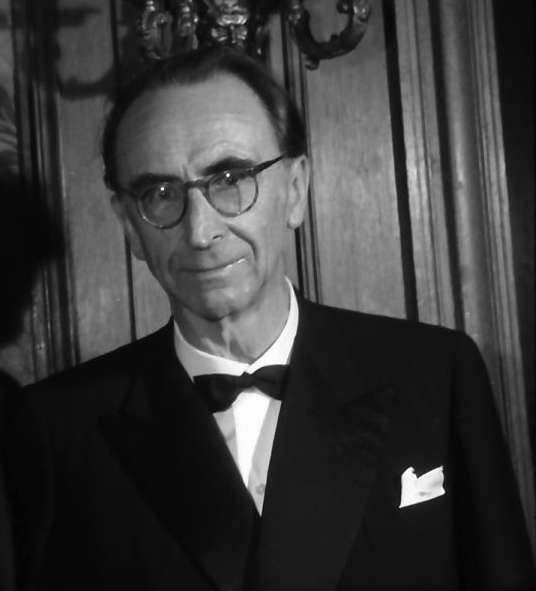
Meet the maestro again

Kenneth Woods | A view from the podium, Music and Media | Tuesday, March 4th, 2008

My interview with young LA music students that ran on the Classics Alive webstite has been re-run on Violinist.com here.

 If you missed it the first time, have a look. The kids asked some great questions.

 K

UPCOMING CONCERT- Lancashire Chamber Orchestra/Thoughts on B5

Kenneth Woods | A view from the podium, Music and Media, Performing Life, Announcements and reviews | Monday, January 14th, 2008

UPCOMING CONCERT-

Lancashire Chamber Orchestra

Sunday, January 20, 2009

7:30 PM

Altrincham Grammar School for Girls

Mozart- Overture to “Die Zauberflote”

Beethoven- Piano Concerto no. 4 in G major

Ivan Hovorum, piano

Beethoven- Symphony no 5 in C minor

Thoughts from Ken-

  (more…)

Copywronger and wronger

Kenneth Woods | A view from the podium, Music and Media | Monday, December 31st, 2007

I’ve written here before about the modern excesses of copyright law. Today, I came across this interesting article in the Boston Globe- it appears that legal scholars have found interesting models for the protection of intellectual property that doesn’t involve the expensive and litigious system now used by record companies and film studios. Have a read and see how stand-up comedians, chef’s and magicians handle issues of creativity without the courts. Also included in the article is an interesting historical overview of the evolution of copyright law:

The question of what level of intellectual-property rights should be extended to creators has dogged America from the start. Even as prodigious an innovator as Thomas Jefferson was reluctant to protect ideas too stringently, maintaining as a point of principle that “ideas should freely spread from one to another over the globe, for the moral and mutual instruction of man.” Yet Jefferson also realized that, in a world where original creations take time, money, and energy to produce but are easy to copy, creators need to be offered “incitements to ingenuity” if they are to keep contributing to the economic and creative health of the nation.
The Constitution was written to maintain this balance between private wealth and commonwealth, allowing Congress to grant to creators - authors, musicians, inventors, and so on - “exclusive Rights” to their creations “for limited Times.” This formulation, the author Lewis Hyde writes, “allows a market in cultural property but also puts an outer boundary on that market.”

For much of the country’s history, that boundary held relatively fast, and led the country through successive waves of innovation.

Yet in the information age, where ideas play a dominant role in the marketplace, the boundary has shifted markedly in favor of private interests. This is clearest to see in the case of copyrights - along with patents and trademarks, one of the three major classes of intellectual property. In 1790, copyright protection lasted a maximum of 28 years, after which the property reverted to the public domain, where anyone was free to make use of it. Between 1831 and 1909, the term was doubled to 56 years. Today, after successive extensions passed into law by Congress - most notably, the 1998 Copyright Term Extension Act, which tacked on 20 years - copyright protection lasts on average more than a century.

Why should we be worried about this? Perhaps because the maniacal greed of oligarchial mega-corporations controlling the mainstream media know no boundries? If you think I’m exaggerating, read this (from the Washington Post)!
 

Now, in an unusual case in which an Arizona recipient of an RIAA letter has fought back in court rather than write a check to avoid hefty legal fees, the industry is taking its argument against music sharing one step further: In legal documents in its federal case against Jeffrey Howell, a Scottsdale, Ariz., man who kept a collection of about 2,000 music recordings on his personal computer, the industry maintains that it is illegal for someone who has legally purchased a CD to transfer that music into his computer.

The industry’s lawyer in the case, Ira Schwartz, argues in a brief filed earlier this month that the MP3 files Howell made on his computer from legally bought CDs are “unauthorized copies” of copyrighted recordings.


Special thanks to Steve Layton at  Sequenza 21 for bringing this to my attention.

c. 2007 Kenneth Woods

Rose City Chamber Orchestra recognized

Kenneth Woods | A view from the podium, Music and Media, Announcements and reviews | Friday, December 21st, 2007

The Rose City Chamber Orchestra (KW principal guest conductor) has been nominated for the first Oustanding Achievement in Classical Music Award as part of the 2008 Portland Music Awards sponsored by Music Spectator Magazine. Other nominees include the Oregon Symphony, James DePriest, Portland Cello Project and Jon Pittman. The awards show is January 28th, 2008

Highlights of the orchestra’s recent work include a residency by composer Christopher Thomas (this is his film website- he also has a strong background in “legit” composition) including a number of premieres, and a multi-year exploration of the musical arrangements made for the Verein für musikalische Privataufführungen (or Society for Private Musical Performances) under ths supervision of Arnold Schoenberg. The most recent installment in this series was the Schoenberg arrangement of Mahler’s Das Lied von der Erde with the American tenor Brennen Guillory and mezzo Alexis Hamilton. 

In 2005, the Rose City Chamber Orchestra undertook a major initiative in training young and emerging conductors when the musicians founded the Rose City International Conductor’s Workshop (KW director). In our first three years, the workshop has atttracted students literaly from all over the world, including many who are sure to be stars of the future. The workshop puts a uniquely high emphasis on accompanying and opera skills, regularly inviting professional soloists and singers to work in masterclasses with the student conductors. The Fourth Annual workshop takes place from July 22-27. 

The Rose City Chamber Orchestra was founded by, and remains entirely run by, musicians who wanted a group that gave them an opportunity to choose their own musical projects. I’m very, very proud to be associated with them, and very happy that their efforts have been rewarded with a bit of well-deserved recognition. The members of the committee put in hundreds of hours of work every year to keep the orchestra going, a degree of commitment and enthusiasm that’s all too rare today.Listen here to a small excerpt from our most recent concert

Podcast- KW’s Zeppelin Tribute!

Kenneth Woods | A view from the podium, Music and Media | Thursday, December 13th, 2007

It was a blustery Friday night, and I had a lot on my mind already. One day away from the final Surrey Mozart Players concert of 2007, we had a great deal of ground to cover in the evening rehearsal, particularly on Mozart’s Jupiter Symphony. 

It’s always a long drive to SMP rehearsals, Fridays doubly so, and rainy, windy Fridays in the holiday season trebly so. As I ground out the long commute, you might well have thought I was using every available minute to prepare myself for a productive evening’s work on the Mozart.  However, fate had intervened when I stopped for petrol en route and bought a copy of The Independent because it had a special commemorative section on Led Zeppelin in honor of this week’s reunion concert.

Having grown up in an age when Zeppelin towered over everyone’s musical interests but had disappeared from the world’s stage, I had always been quick to grab anything written about them because it was such a rarity in the 80’s. Old habits die hard, so I inhaled the features while downing a quick cup of coffee.  By the time I’d finished reading, I was struggling to remember much about Mozart admidst my righteous indignation at what I’d just seen in print. (more…)

Meet the maestro

Kenneth Woods | A view from the podium, Music and Media | Saturday, December 8th, 2007

Yes, in this context that means me 

LA based violinist Lindsay Deutsch has a foundation  called Classics Alive dedicated to encouraging young people’s participation in music and they’ve set up a fantastic kids website and newsletter. Their newest feature is Meet the Maestro- last month it was Borris Brott, who all my Canadian friends know well, and this month it is me.

Click here to go directly to the interview I did with a fascinating panel of young musicians and here to go the kids home page.


The true strength of tonality

Kenneth Woods | A view from the podium, Mahler, Music and Media, Nuts and bolts | Saturday, November 3rd, 2007

12-tone music is popping up all over the blogosphere lately, or, that is, discussions about it- how all those empty halls for performances of Beethoven symphonies were actually caused by Milton Babbitt and about how so much insipid monotonal neo-pasctichio music is actually a deeply personal response to the traumas of having studied with someone who knew Berio.

Elaine Fine recently wrote a quite thoughtful and perceptive piece on 12-tone music and music reservata, but it still left me feeling like something was left out.  

Of course, a lot of these things read like group therapy. It seems that 80 years on, people are still mad about the longstanding tradition overblown rhetorical flourishes begun with Schoenberg (this new method will insure the supremacy of German music for the next 100 years) to Boulez and Stockhausen. Word to the wise- don’t take these things to seriously. Public pronouncements from composers are a great tool for getting noticed, and hopefully getting their music played more often, but you don’t really believe what Stravinsky said about Beethoven and Gounod, do you? You don’t really believe what Debussy said about Wagner or Saint-Saens, do you? He copied too much from both of them for that to be true. People like to talk about how the serialist bullies dominated academia in the 60s and 70s, but didn’t Piston, Creston, Diamond, Schuman and Hanson all have academic positions in the US? As with everything, at all times, don’t believe all the hype.

However, nothing I’ve read lately seems to have captured what the real problems are with atonal music and the real strengths are with tonal music. To read most commentary, the problem with atonal music is that it is ugly and the strength of tonal music is that it is pretty. People like pretty music and don’t like ugly music. Those planet-raping modernist “composers” such as the diabolical Berio like ugly music and don’t like pretty music, which is why they write atonal music.

To quote Richard Taruskin: Balderdash!

I actually think one of the liabilities of much tonal music, especially the very best like Haydn and Schubert is that it is too pretty for modern ears. Especially for the young, emotionally intense crowd that we’re trying to attract, 20 seconds of Haydn can just sound like background music for a tea party. All the sinister wit and deep pathos, warmth and irony is completely missed- they find it just as incomprehensible as many others find Stockhausen. Noise music, atonal music, electronic music- all of these demonized modernist idioms- have all long since become mainstays of popular culture in rock, rap, dance, techno and movie music, while voice leading, modulation, tonal centers and structural chromaticism have long since been excised from the tool box of the popular song-smith.

No, ugly and pretty have NOTHING to do with it. I know, some of you reading think I’m wrong, and that you really cannot stand the abrasive cacophony of “modern” music, and you’d rather have a tooth pulled than listen to 10 seconds of a mature Schoenberg Quartet. Trust me, you’re wrong- you actually do like that sound, you just don’t know it yet, because you have not made an emotional imprint of that sound-world.

The real strength of tonal music has nothing to do with how pretty it is, or how harmoniously all those overtones ring in a triad, because the strengths of tonal music are apparent in modal, quartal and highly chromatic music. The amount of dissonance doesn’t seem to matter. What tonal music has is tonality, which is to say tonal relationships.
Tonality is possibly the most powerful tool ever invented for creating musical form, and it is no surprise that long forms grew out of an era in which composers were discovering ever more powerful expressions of a wider range of tonal relationships.

Tonality is all about relationships between keys. In our modern world, it is easy to see the classical voyage from tonic to “not the tonic” and back to the tonic as a bit too neat and tidy for a world of genocide, nuclear weapons and Dick Cheney. However, tonality doesn’t mean that you always return home, it means that tonal areas have specific relationships to each other, and that these relationships have intrinsic emotional meanings and resonances.
Whether it’s the magic and mystery of Schubert’s third relationships or Mahler’s metaphysical understanding of the myriad meanings of progressive tonality, Beethoven’s life and death struggle to get from D minor to D major or the simple perfection of a binary form tonic-dominant-tonic dance movement, tonality gives composers an unbelievably powerful tool for creating compelling musical architecture.

Musical architecture, form, structure- these are all rather cold sounding words. In another art form you could call these story, plot or even just meaning. Meaning is what brings people to art- when a listener gets to the culmination of a work and can feel the cumulative impact of everything they’ve heard so far, whether it’s a Beatles song or a Berg opera, that is the point at which their brain really begins to latch onto and bond with the sound world, the pretty and ugly, of the piece. If you’ve never felt the form of a piece of atonal music, your brain has never then gone that extra mile to imprint and internalize the rhetoric. Form is metaphor- tonal relationships give music the chance to express patterns of nature, of life, of distance and loss, of return and release. Tonality is the most flexible and powerful tool for expressing tension, for expressing distance,  and for creating a musical landscape as infinite, four dimensional and complex as the world we experience and try to understand in our daily lives.

This is not to suggest for a second that atonal music lacks form, but to point out that tonality (not prettiness) is the most powerful tool for creating and expressing form. In its purest form, 12-tone music eliminates that hierarchy completely, making all pitches equal, and only the order of pitches has meaning- the prime form of the row replaces the tonic.

The problem of form in serial music is one that many composers have meditated on and worked at for nearly a century with hundreds of spectacular successes. Some have resorted to sneaky forms of tonality- Boulez’s Messagesquisse, the subject of my DMA lecture recital, has a very clear tonic pitch of e-flat and a very clear dominant of a- natural, the first two pitches of the set SACHER (eb-a-c-b-e-d) the piece is based on. There are thousands of other ways of expressing form, but tonal relationships are such a simple and powerful tool, one does away with them at one’s peril, and if one does away with that tool without realizing the value and the power of the tool you’ve given up, then you’re really in trouble. I’d like to do a post on Berio’s Les mots sonts allés, which expresses in a very short time span and incredibly powerful and relevant form. Stay tuned….

NOW- hear some more hideously ugly, despicable music of Berio, that lout, that vile killer of all things beautiful. This is KW conducting a performance of one of the folk songs with Patricia Rozario from a recent broadcast. Listen carefully and you’ll get a sense of just how much he despised melody!

c.2007 Kenneth Woods

Does the Noise matter?

Kenneth Woods | A view from the podium, Music and Media | Friday, November 2nd, 2007

I was delighted and genuinely surprised this morning to see something completely unexpected as the main story on Salon.com- an extended discussion of Alex Ross’s new book, The Rest is Noise from Kevin Berger.

I read Salon everyday, and have for some years now, but not for its arts coverage, which can only be called pitiful. The internet has been a boon to classical music, but not the top electronic newspaper. Salon is supposed to be news for the smart crowd, but their main cultural interests are network TV and mainstream film. They also religiously feature one thought-provoking essay per-week on what Brittney Spears tells us about society.

So how does a zillion page overview of 20th Century music end up as their main story? It’s the power of the blog, I’m sure. Although the New Yorker is great magazine and great publication, I’ll wager it is Alex’s blog that has really built the buzz behind this being the most talked about book on classical music since The Maestro Myth.  Ain’t that ironical?

No review here, as yet (a performer reviews a critic? don’t hold your breath….). I’ve ordered my copy to pick up in Oregon next time I’m there. I had hoped to catch Alex in Portland last week, but got in an hour too late.

However, Berger’s first excerpt from the book put me in the mood to be devil’s advocate….

From 1900 to 2000, Ross writes, classical music “experienced what can only be described as a fall from a great height. At the beginning of the century, composers were cynosures on the world stage, their premieres mobbed by curiosity seekers.” When Mahler walked the streets of Vienna in the 1900s, passersby would stop and whisper to themselves, “Der Mahler!” “A hundred years on,” Ross writes, “no one whispers, ‘Der Adams!,’ as the composer of El Nino walks the streets of Berkeley.”

Almost all the discussion of what has happened to classical music over the last 15-20 years, whether from those who say these are the darkest of days, or those of us who are more hopeful, has focused on the impact of non-musical trends: the removal of classical music from public school curricula, the over-saturation of the CD market, downloading’s impact on CD profitability, a steep increase in anti-intellectualism in Anglo-American culture, the disappearance of government support for the arts, a shift in wealth from established philanthropic families to boom-bust new economy millionaires (many of whom are the product of a business centered education and whose liberal arts backgrounds are nearly non-existent), the erosion of diversity of media ownership and the disappearance of locally owned newspapers and radio stations.

It’s a long, and depressing, list.

Everyone else blames Berio, it seems…

However, are there any musical reasons for the difficulties we’ve all experienced?

Far be it from me to compare the enduring musical qualities of Mahler and Adams….. er, ah…. But…. I would suggest that if one looked just at orchestras around 1985-1990, compared to 1990-2000, or 2000-today and considered who was conducting where, I think it’s possible that one might draw the conclusion that some orchestras are worse off economically now because they are producing a product that is in some ways less artistically compelling to that of 25 years ago.

Alex himself offered a potentially relevant positive factoid on his blog

Some good news from Chicago, via John von Rhein: “For the second straight year, the [Chicago Symphony] exceeded 85 percent paid capacity in ticket sales, including a more than 3 percent increase in single ticket sales from the previous year. Roughly 30 percent of CSO main series concerts were sold out or exceeded 95 percent capacity. The renewal rate for CSO main series subscriptions was more than 87 percent, the highest in 11 years, according to orchestra officials.”…

Is it worth considering whether the changes in artistic leadership that took place a little over 11 years ago and in 2006 might have had a direct and measurable economic impact? Is it possible that in the post-Solti years, some members of the Chicago public were staying away NOT because of all the cultural and economic trends I listed above, but simply because they felt the concerts were not as interesting, exciting or just plain good as they had been? Is it possible that they’re now seeing an upsurge in audience support that coincides exactly with a change in artistic leadership?

I’m just,er… asking….

I would say, however, that I grew up going to CSO concerts and was always impressed at how incredibly knowledgeable the audience there was….. knowledgeable and passionate about the orchestra…. musically literate and sophisticated…. I’d also say that I never saw a boring concert at Orchestra Hall in all those early years…

In the name of not completely torpedoing my career, I’m going to stop, but you… go on… have a think…. What other super-elite orchestras have had similar changes during this time? How many of the very top orchestras in the world can really be said to have superior artistic leadership in 2000 compared to 1980? Is there a correlation between those orchestras that downgraded or upgraded their artistic leadership and the long-term health of their economics? It’s too early to tell which way we’ve gone since 2000, but I do think that the artistic quality of our music making (and not just the technical perfection of our playing) will have some impact on how we’re doing in 2020.

Just asking….

NOW- Listen here to the sounds that ruined classical music. KW conducts the music of the accursed Luciano Berio, destroyer of music and stiffler of creativity around the world.  This is his Serenata for Flute and 14 Instruments from a recent broadcast.

c. 2007 Kenneth Woods

Slatkin to Detroit

Kenneth Woods | A view from the podium, Music and Media | Tuesday, October 9th, 2007

Congratulations to my old teacher and mentor Leonard Slatkin on his appointment as Music Director of the Detroit Symphony, where he is succeeding Naime Jarvi beginning in the fall of the 2008-9 Season.

Leonard offered the following comment in a press release from the DSO website- “Last May, I conducted the Detroit Symphony Orchestra for the first time in 20 years,” said Leonard Slatkin, “and it was clear from the first downbeat that this was an extraordinary ensemble.  We’ve reached agreement in a very short time and I am happy and honored to take the helm of this great orchestra.  I believe we can develop a vision for excellence, education, new and American music, recordings and touring that will bring new attention to the quality and tradition of the Detroit Symphony, locally, nationally and abroad. I look forward to a most exciting and rewarding tenure.”

Although Slatkin will officially assume his role with the DSO in the fall of 2008, he is actively participating in artistic and strategic planning beginning immediately. “We are already making significant plans for future seasons,” he said. “Next season I will lead five subscription weeks, and the year following, one-half of the orchestras’ concerts, as we develop our sound and image together. We will also continue the tremendous educational activities already in place and institute new initiatives as well.”

One of Leonard’s most successful projects at the National Symphony has been the National Conducting Institute, a program which has had an incalculable impact on conductors and their orchestras all over the world. I hope he’ll continue to share his experience and insights with young conductors at the DSO.

I haven’t caught a DSO concert in a long time, but Jarvi’s hallmark is usually to build orchestras that work very fast to a superb technical standard. Leonard shouldn’t have to do a lot of “orchestra building,” but I think he has a fantastic opportunity make the orchestra a central part of healing a troubled city. No American conductor understands social trends, political issues and community moods better than Leonard- could he make the DSO the American equivalent of Rattle’s City of Birmingham Symphony Orchestra? How exciting would it be to see an orchestra at the heart of an effort to redefine  and reinvigorate one of the great American metropolitan areas….

Congrats, Leonard.

Official Detroit Symphony Press Release

Detroit Symphony Welcomes Leonard Slatkin slide show (wmv)

Leonard Slatkin Official Website

National Conducting Institute


UPDATE- Of course, Leonard was also recently appointed principal guest of the Pittsburgh Symphony, and they have already announced that he will create a new conducting program there similar to the NCI. More here

 UPDATE II- More detail from the Washington Post here and here.

400 Posts- how much could I have gotten done with that time?

Kenneth Woods | A view from the podium, Music and Media | Saturday, September 29th, 2007

By the official tally, this is my 400th post on Vftp, a milestone I can only gawk at in astonishment. Have I really wasted so much time in the last 18 months?!?!?!?

The blog idea was originally suggested to me by the harpist of the OES (and founder of Harp Specturm), Joyce Rice. Although I could see the benefits to the orchestra and to me, I was a bit hesitant to take it on, and knew so little about blogs and blogging that I couldn’t really see the point. Blogs were something I’d heard discussed and had been described to me as “online journals” where people could share the details of their lives. I was not, at that point, particularly web-savy-I didn’t even have a website! Now we have the top-ranked conductor website on Google….

As it is, the journal aspect of blogging, which is what I thought of when Joyce spoke to me, is still, in many ways, the least interesting for me. What I have learned, is that the basic medium of blogging, with the power of linking and subscriptions and indexing is an amazing new force. I figured it was a very good sign when the mainstream press (even the mainstream music press) started complaining about blogs. It’s about time someone challenged their hegemony, whether in politics or musical politics.

What finally got me going here was the need to make something special happen in Pendleton around our first performance of a Mahler symphony. I was looking for a tool to get something going, and I found one. I was quite stunned at how fast we built a local readership of symphony fans, and musicians, as that concert approached.

The immediate result of that first series of posts was a strong audience response to our first Mahler at the OES, but I found a second benefit in it. The experience ended up reminding me of a seminal experience in my musical life. Over ten years earlier, my piano trio, the Taliesin Trio, was awarded a National Endowment for the Arts Rural Residency Grant. A big part of our job as ensemble-in-residence in Union County Arkansas (at that time, the poorest county in the continental US), was school visits and concerts. Early on, we were given a rare chance to do a full-day workshop with a group of children of about age 6-8. In a moment of profound chutzpah, we chose to make the prime focus of the day the Shostakovich E minor Trio. We spent the entire day working with these kids, and talking to them, as simply but as honestly as possible about the music- how it’s put together and what it says.

The next day, we had a formal performance which included the Shosty. It was an amazing performance, if I do say so. I think we all felt that the work we had done to learn to express verbally what we felt about the piece had added a layer of depth to our performance. The adults at that concert hadn’t heard the rap we gave the kids, but they certainly felt the effects of it.

I’ve written a lot of program notes over the years, and almost always speak before at least one piece on concerts, but the Mahler 2 blogs opened up a new way of writing and thinking about interpretation, and, as with the Shosty so many years ago, I felt that part of what happened in that concert was informed by that process. It almost doesn’t matter whether anyone had read those notes, or whether they’re interesting or definitive, what matters is that somehow the process of trying to articulate my feelings about a piece took me deeper into the music.

To me, that’s still the most useful aspect of blogging- it gives me medium for that work. I suppose in that sense, it could be looked at as a pretty selfish endeavour, but the ever-increasing readership tells me that at least some people are enjoying reading those posts and hopefully, as with the audience in Blytheville, even if you don’t hear or read the rap, maybe you feel it in the concert because the investment of the performer pays off.

One thing I learned early on, but still have to remind myself of, is that it’s not just my old drinking buddies that read this thing- intelligent people I’ve never met read it (not that my drinking buddies are unintelligent). Some have become friends, others have helped me in amazing ways. In November of last year, I had an email from Gramophone magazine asking if they could make Vftp their featured blog for the January issue. It turns out I was recommended to them by their resident Mahler expert, Peter Quantrill, who I’d never met and had no idea was reading. I really do appreciate all the folks out there who’ve linked to me, especially those early on who gave this such a big boost. A special huge thank you to Jessica Duchen, who was probably the first really well-known blogger and critic to link to me. THANKS Jessica- all of you should buy her novels!

Of course, one can only be self delusional to think that all those folks out there reading the blog that I don’t know about actually like it. My basic editorial policy at Vftp is “try not to piss people off,” but every once in a while, I can’t help myself, even though I do live in the ultimate glass house. Sometimes, you just gotta throw those stones. I can think of one critic and one conductor and one “opera” singer who probably wouldn’t have liked everything I’ve said here. I can’t help but wonder if any of them have read about themselves here. Sorry if I hurt any feelings….. Still, who makes up phrases like “pure tone?” Does anyone try to play with “impure tone?”

I also have to bear in mind that there are people who will take anything a conductor says as proof positive that we’re all bastards and morons and frauds. Every so often, I get a nice vitriolic email, but I suppose the best ones are the ones they send to their friends “can you believe what that moron Woods says?”

The thing is, I’ve always had to accept that there are plenty of topics I’d love to discuss here that I can’t. Here are a few things you won’t hear much about on Vftp—

1-       Politics. My friends know that I’m a very politically active and interested person with very strong views on world events and political trends. Especially in these strange days, there’s so much I wish I could say to the world at large, but I have a responsibility to the orchestras I work with not to do or say anything that would drive away listeners or supporters who disagree with me, and I also feel that as musicians we have a responsibility to bring music to everyone, not only those who share our worldview. Please, read Glenn Greenwald every day.

2-       What “really” happens in rehearsals. I don’t want anyone I work with to ever worry that their efforts in rehearsal are going to become fodder for the blog. Rehearsals are a private environment where we all ought to be safe to learn.

3-       Reviews (by me). I’ve bent this rule occasionally, but at the end of the day, who am I to comment on another musician’s performance

4-       Music politics. There are some big stories out there, some downright outrages and some heartbreaking wrongs in the music world that need righting, but I want to keep making music, which means, for now at least, I can’t go there.   

Other than the fact that I can’t always say everything I’d like to here, I guess my main frustration is that I don’t get that many audience members coming here other than the hard core fans and fanatics. More often they come here after a concert, which at least means they’ve enjoyed the show, but it would be nice if this could be a stronger tool for getting people to the concert in the first place. Maybe we need to have a separate blog at the orchestra that is specifically targeted to the interests of local audiences so that I don’t scare them off here with wonky discussions of musical technicalities.

There have been some truly unforeseeable uses of this space- especially when the OES office famously burned to the ground last spring. The response to the orchestra’s plea for help through this blog was really touching, and made all the difference in the world to the orchestra surviving the year. Amazingly, it was donations from all over the US (and the world, with people as far away as Australia and Israel chipping in) that got us through. Thank you EVERYONE who donated cash, music or just wrote in support. You saved an orchestra.

There are only so many hours in a day, and I couldn’t rationalize continuing to blog if I felt it was taking away from score study time. As long as I feel like, on balance, it helps me sharpen my thoughts about performance to talk about music, I’ll keep doing it. However, 400 posts represents a LOT of time, and there are other things I want to accomplish in life- I’d like to write some books, I’d like to compose more and I want to do more recording. I’ve got some great podcast projects for this blog in the works- maybe you’ll see fewer daily posts in the future so I have time to assemble some interesting audio and video projects.

Anyways, thanks for reading this, whoever you are. And remember, always fight the powers that be.

c. 2007 Kenneth Woods 

Thoughts about singers

Kenneth Woods | A view from the podium, Music and Media | Wednesday, September 19th, 2007

I’ve always enjoyed life in Wales since moving here a few years ago. Cardiff has a nice mixture of urban stuff in town with proximity to lots of natural beauty.  However, my wife worries that one aspect of Welsh life poses as significant threat to my long-term health.

This is the way I tend to turn redfaced and start ranting incoherently when, it seems like daily, someone on the news refers to the latest antics or good deeds of one of the two famous young, female “opera singers” from Wales.

“But she’s never sung in an opera, she’s never won and audition, she’s never coached a role….” I start to stutter at the mention of the girl with the “voice of an angel” or classical Barbie (some prefer “warbling Barbie)….

How happy was I today to read this quote from Kate Royal in BBC Music Magazine?

”Opera is a tag people latch onto without seeing the whole picture. Some people think it means singing loudly with a wobbly voice. But I can’t believe in an ‘opera’ singer who doesn’t sing opera on the stage. A three-minute aria is not opera. Many of these so-called opera stars cannot sing without a microphone. I was gobsmacked the first time I saw Die Walkure: how did those singers project over a huge orchestra and fill an opera house? If you are involved in opera you have to relish the challenge of taking on a role, forming relationships with the cast and entering into the drama- you forget there’s no amplification!”

Of course, Kate’s just suffering sour grapes because she doesn’t have the glamour and good looks of today’s favourite ‘opera’ girls…..


opera singer- Kate Royal 

‘opera’ singer- KJ    


or, ah, maybe not…..

In any case, it’s the SINGING that counts! Trust me, you’d never listen to someone singing sharp and warbly for an enitre Wagner opera and think- “well, at least she’s hot,” and a great singing actress can convince an audience of her overwhelming sex appeal (if the role calse for it) regardless of her shape or age.

The stereotype of the nitwit singer is a bit like the stereotype of the egomaniac incompetent conductor. Actual sightings are rare, but the stereotype is so ingrained that all verified sightings of nitwit singers are reported to the world.

Like many conductors, I have built a list of singers I know and trust. When I moved from Cincinnati, a singing mecca, to Oregon, it took me a few years to rebuild that list from scratch, but now I have a network of people whose singing I love and whose opinions I trust. We just had a late cancellation of a soloist for Mahler 4 at the Oregon East Symphony. In such a situation, you can be assured I do not start calling agents and conductors- I call singers in my network. They’re the ones who know voices, attitudes and skill sets, and they know that our working relationship is founded on mutual trust and respect, so they’d never steer me wrong. Within 72 hours, the problem was solved. No small feat when I’m 5000 miles away and can’t audition anyone.

One thing you’re not likely to hear me say often is “wow, the Vaughan Williams was amazing!” It’s not that I dislike his music, but I often feel there’s not enough structure, rigor and purpose to sustain his musical thoughts in long forms in spite of his incredible ear for color. I’m sure I’ll get it some day. However, a few days ago, I came out of a concert saying just that after hearing James Gilchrist sing “On Wenlock Edge” with the BBC National Orchestra of Wales. Afterwards Tadaaki Otaka (who was conducting) and I were chatting about it and it was the first thing he said to me-“wasn’t the Vaughan Williams wonderful? First time for me, but such a beautiful piece.” Both he and I were stunned at Gilchrist’s singing- so musical, so intelligent and so natural. He’s apparently got a new recording of the piece out which is doing very well- no. 20 on the classical charts (Classical Barbie is no. 3, however). I don’t see how a recording could begin to do justice to that kind of communicative immediacy, flexibility and command, but you may want to check it out anyway. It’s Vaughan Williams French-iest piece. Fanstastic stuff. There’s always been a slightly snooty tone associated with the phase “English tenor,” but having heard Gilchrist and Mark Padmore both this month sounding amazing, I think we can put that old prejudice to rest.

However, we can’t hide from stereotypes, and I have to say that this post from Michael Hovnanian made me laugh out loud. I know we’ll miss Pavorotti, and the guy could flat-out sing even if he didn’t read music (and he was an opera singer, not an ‘opera’ singer, no question), but a bit of perspective might not be such a bad thing admidst all the hyperbole about the “greatest tenor of the last fifty years.” Wasn’t there some other guy who sang, like, a thousand roles in eightly languages from memory named Flamingo? King-Kong versus Godzilla. You gotta love it…..

Light up the scandelabra!

Kenneth Woods | A view from the podium, Music and Media | Tuesday, September 4th, 2007

Thanks to AC Douglas for pointing out this little oddity   (more here and here) about and orchestra and a conductor at each other’s throats. I hate to sound glib, but one should really not take these things too seriously. As one of my dear friends in grad school used to say- there’s a bright new light on the scandelabra today!

The media loves these little tempests in teapots, as do readers, it would appear.

This scenario unfolds all the time at big and small orchestras, and everyone seems to like to figure out what the “truth” is. Is the conductor really that bad? Are the orchestra musicians all bitter and washed up? Is it the union mentality run amock? Surely it’s the board’s fault? Why didn’t the management do something to prevent this? Is the conductor’s career over.

The fact is, at times like this, the metaphor of a marriage seems particularly apt, except that, with very, very few exceptions, all musical marriages, by their very nature, end in divorce, amicable or not. When a conductor sues an orchestra (really, that’s a good one, I have to say- I’d love to hear the testimony “but your honor, they play so damn late!”), or a players committee leaks a damning artistic assessment to the press, things have been bad for a long time, and, almost without exception, all parties- board, management, musicians and conductor- have helped shape the slow moving train wreck now so publicly on show. If I have one general sense of these situations, it is that, if things have gone sour, separate and move on. Fighting off a coup or holding onto a job you’re not happy in or where the work is not satisfying everyone makes nobody happy and only delays the inevitable.

Just as people can go on to find love again after a painful break up, so musicians find new opportunities. Believe me, if an orchestra enjoys working with a conductor, the last thing they’re going to worry about is whether or not the last orchestra liked him or her. Likewise, if they don’t get on, the fact that the conductor in question is considered a saint, genius and national hero at his previous orchestra means nothing. Remember how Charles Dutoit’s career was supposed to be over when he and the Montreal Symphony fell out so publicly- would someone so controversial ever work again? Well, if you consider principal conductor appointments with the Philadelphia Orchestra and Royal Philharmonic to be working, then, yes he is. Riccardo Muti, anyone?

I don’t know anyone involved in this scenario and have no idea about the past history leading up to this meltdown, but maybe, when everyone’s so obviously gone all “War of the Roses” on each other, the best and most dignified thing to do is to just say- “sorry, we all kind of lost it there… painful time…. lets move on.”

Besides, the real cloak and dagger stories of intrigue and evil never make it into the press. Believe me, there are things worse than conducting too fast…

c. 2007 Kenneth Woods

When you’re smiling, when you’re smiling…

Kenneth Woods | A view from the podium, Music and Media, Performing Life | Saturday, September 1st, 2007

I’m back at VFTP International Headquarters after a nice little vacation, which means my musical summer is officially over, and it’s back to the musical salt mines for another year of hard graft….

One thing that I enjoy about the slightly more laid-back work load of August is that it gives me some of my only opportunities all year to be a spectator at concerts. I did see some great concerts this summer, and some not-quite-great ones as well, and all have given me a lot to think about.

One thing I’ve noticed lately is that performers are smiling a lot more on stage these days.

I mean, a lot more.

Now, lest you think I am the world’s most miserable curmudgeon, I am not out today to write a blog post in opposition to smiling, but some of the smiling I’ve seen this summer has really gotten my back up.

Yes, I know classical musicians have a bit of a bad reputation for looking less-than-sunny, even unhappy on stage, but so do hard rockers and Miles Davis, and it hasn’t dented their popularity. However, what I really think bothers audience members is when we look uninvolved on stage. It certainly bothers me.

However, when someone is smiling through all four movements of Shostakovich 10 or the last chorus of the St Matthew Passion of Bach, I think something is really, really wrong, because surely that is the epitome of un-involvement.

I’m getting a bit tired of hearing how “you could just tell how much fun the musicians were having onstage by the way they were all smiling.” Frankly, it is not always appropriate to enjoy our work or to be congratulating ourselves in mid-phrase on how wonderfully we’re doing. An actor would never smile in the midst of Hamlet out of appreciation for the perfection of the writing or the lovely staging. The end of the St Matthew Passion is not the time to give your fellow performer a smile that says “hey, great bow stroke!” If you’re thinking about the piece in those terms at that moment, you’ve really let your audience down because you won’t have gotten anywhere close to the heart of the work. Likewise, when performers start mugging for the public in a way that contradicts and undermines the emotional content of the music we are cheapening the music. I’ve seen some pretty world-class cheapening lately, and it really worries me that all this mugging and showboating seems to be commented on mostly as good thing.

Of course, in happy music, smile! In joyful music, radiate joy. Cry if you like ,(I was quite moved to see one of Britain’s great singers in floods of tears taking bows at the end of one performance this summer- he had certainly been in the music to get to that place), scowl, close your eyes, laugh out loud, but be the music, or at least , for Pete’s sake don’t undermine the music. Don’t, dare I say it, RUIN the music.

There was a time in American orchestras when we were all taught that orchestra musicians should not move or emote in any way onstage. The idea is that you are not there to call attention to yourself or do anything that might detract from the music. For me, I love to see an orchestra play with physicality the way Berlin and Vienna do- I think it makes for more involved playing. However, it’s good to remember that too much contrived, mannered, superficial and trite stage business can take away from the music and even annoy the audience.

So, a simple plea- think before you smile.

c. 2007 Kenneth Woods

PS- How about your lists of Top 10 pieces, movements or moments any conductor or instrumentalist should be shot for smiling during? Maybe you think I should lighten up and smile a bit next time I do Mahler 6? Let’s have some comments!

Blind Light- get them involved

Kenneth Woods | A view from the podium, Music and Media | Wednesday, August 15th, 2007

The best art show I went to last year was the exhibit “Underground Surrealism” at the Hayward Gallery on London’s South Bank. Check out the view I had last year here.

Assembled and currated with care and insight it was a show that was more than merely a collection of interesting works of art, but a compelling and thought-provoking exploration of a world of ideas and a moment in art history.

Given how much more compelling that show was than anything I’ve seen at the Tate Modern since Matisse Picasso, or anywhere else for that matter in quite a while, I wasn’t surprised to hear that this summer’s show at the Hayward had become a huge hit, the most successful show in the gallery’s entire history. Someone at the Hayward is doing something right.

This year’s show, “Antony Gormley: Blind Light” is a major retrospective on the work of British sculptor Antony Gormley. The change in focus from an entire creative epoch to the life’s work of one man represents a huge change of emphasis, and yet, literally, there is so much at work in this exhibit that the gallery alone cannot contain the entire show.

As one approaches the South Bank Centre, one becomes aware of solitary human figures on the tops of buildings, along the bridges and across the river. It is as if the entire area is haunted by these strangely enigmatic forms. This is an installation called Event Horizon, which spreads over much of the area around the South Bank on both sides of the Thames. Right away, one is engaged, even before you’ve entered the show. You’re asking questions, you’re seeking out information- how many figures are there? Are they all to the same scale? Are they all made from the same model (as a matter of fact, they’re all the artist himself. Doest that change the meaning of the installation?)”

Even with extended hours in this, its final week, tickets are scarce for this show. We arrived at 2:30 and got some of the last tickets available for all of that day (the show closed at 10 PM). It’s great to see this kind of demand for a show of works by a living artist, and it’s clear from a look around the courtyard that the show is attracting a mixture of art lovers and tourists, with quite a few kids around.

Once inside, the clear star attraction is “Blind Light,” with an extra 30 minute wait to enter. The idea seems blindingly obvious: Gormley has built a giant glass tank, filled it with clouds of dense water vapour and flooded the entire space with blinding bright light. Punters are both viewers and part of the exhibit- you go in and walk around (visibility is less than 2 feet) and become disoriented. There is light, but there are also elusive shapes, sometimes ghostly, sometimes close enough to register as ordinary faces. You may bump into the glass walls, in which case your own form becomes something observed by those in line outside until you disappear back into the fog.

What was remarkable and refreshing about “Blind Light” was the sense of play, even joy it brought out of those there. There was laughter, and yet there was a genuine effort to understand, to contemplate- passive viewing is replaced with active engagement. Interestingly, the many children present were some of the quickest to see the many possible metaphors. One young boy of about seven looked in from the outside at the ghostly shapes appearing and disappearing and said “mommy, it’s all the dead people in heaven.” Another said “the people look lonely when they disappear in the fog,” and so on.

The musician in me couldn’t help but want to look for ideas that could be taken to concerts. After all, Gormley’s work is doing exactly what we say we want classical music to do- engage, involve, challenge and awaken the audience. To me, most of the ways of doing this in classical music end up being trite and awkard, but is that the difference between presentation and content? Perhaps the lesson of this show is that we have to find answers in the content we present, not in how we present it.

In a certain sense, Gormley’s work is about as simple as it gets- his subject is the body, and we all have bodies. We can look at any of his pieces with a view to seeing echoes of ourselves in them, so even though his medium is basically rather abstract, there are pathways in. Where so much moderninst music can be alienating for listeners, Gormley’s ideas are instantly accessible, even though the language he works in is abstract. Perhaps too much so- time will tell if this is great art, but at least it is great for art.

c. 2007 Kenneth Woods

My way or the highway!

Kenneth Woods | A view from the podium, Music and Media, Nuts and bolts | Monday, August 6th, 2007

From the “I know I live in a glass house” file…

A recently released recording of  Mahler’s Second Symphony apparently comes with some rather provacative liner notes from the conductor, which have been widely quoted in the reviews. The quotes alone were enough to get me writing…. I’m sure you all know the conductor I am speaking of, but I honestly don’t want this to be a personal attack on anyone, but a discussion (albeit spirited) of ideas, as I feel the quotes alone, and their use in the media, point to a some fundamental problems in the way we talk about music today, so I’ll leave the conductor out of it and look at the ideas, which I believe are often factually wrong, misrepresented or irrelevant.

This conductor, for instance, claims that he’s breaking new ground in restoring Mahler’s original bowing at the beginning of the second movement of the symphony (the entire phrase in one down bow portato). He apparently states that by restoring Mahler’s long forgotten and lost original bowing, he’s found the key to the tempo of the piece. The conductor’s contention is that (and I paraphrase) one cannot do Mahler’s original bowing in the slow tempo it’s usually heard at these days, which is why all conductors now take it all in separate bows at a much slower tempo.

This contention is so laced with misleading nonsense that I feel I need to break my usual no-slagging-off-other’s-work rule (anyway, I have no opinion on the recording, which I’ve only heard excerpts from, I’m just critiquing the “ideas” put forward in the liner notes).

 First of all, many conductors, including me, use Mahler’s original bowing and always have. It’s not a lost bowing- it’s right in the score, and always has been, and people use it all the time. Second, Mahler’s original bowing does not necessarily dictate a particular tempo- one can take it as slowly as one would wish (espcially if you have a large string section), it just means you’re likely to have to play it softer or with a more focused stroke to save bow. Third, conductors who modify the bowing do not all do it in separate bows- there are many ways to bow the theme, any number of which can be quite true to Mahler’s articulation and phrasing. In different halls, with different groups or with a different sound concept, another bowing may be perfectly justified if it does no violence to what Mahler has asked for. Fourth, it is not entirely clear that Mahler really wanted portato here- he’s less systematic with his use of this kind of articulation marking (dots under a slur) than Beethoven, who _only_ uses that marking for portato (as opposed to staccato under one bow).  One need only look at how the same theme is orchestrated later in the movement when it is written pizzicato to question whether long notes were what he wanted at the beginning. I’m not saying that he meant staccato at the beginning (I think he meant for each of the three statements of the theme to be lighter and shorter than the one before it, culminating in the pizzicato the last time, but I recognize my reading could be wrong), only that there is a very strong argument to be made by those conductors who do play it that way. In any case, it would be an act of radical laziness to base the tempo for an entire movement of a Mahler on a single bowing (the more obvious example of a bowing that really affects the tempo is the spic at figure 3). I take the movement on the faster side, but there are arguments for a range of tempi, all of which should be carefully considered before deciding. After all, although he marks “con moto” (with motion) he also marks “very laid back” and “not rushed.” The indications are contradictory, which means the conductor has to find the right balance of “with motion” but “not rushed.” For different conductors (and listeners) that balance is going to be found at different tempi, but that has nothing to do with the bowing.

If this conductor is somewhat misleading in his analysis of the articulation of the main theme of the second movement- resorting to telling you the reason to listen to his recording is that it corrects some great historical wrong at the hands of an army of lazy and uncomprehending conductors, he turns to telling good old fashioned pork pies when talking about the use of vibrato in Mahler’s time.

I suppose it is possible to contend that Beethoven should be played without any vibrato on the grounds that we cannot prove absolutely that he expected it to be played with any, although I’ve always found that argument simplistic in the extreme. Surely one of the most powerful coloristic tools available to a musician, a tool that is part of the singing traditions of all non-microtonal folk musics, deserves more thoughtful consideration and application than a simple yes or no answer.

However, it is simply not possible to back up a statement as ludicrous as this one-

“pure tone” was “normal with all orchestras until the 1920s. We don’t believe Mahler ever heard a classical orchestra…playing with permanent vibrato.”

in the face of overwhelming historical evidence to the contrary.

There is ample testimony from the musicians who played under Mahler that he felt that vibrato was an essential tool, and that, if anything, he expected more vibrato from string players than may often be used now. In 1964, Herbert Borodkin, violist with the New York Philharmonic from 1904-09, recalled that Mahler “used a lot more vibrato than most conductors do today. He insisted on it. He asked for it. When you played a melodic tune, you would have to use a lot of vibrato and sing, as he called it.” Other colleagues, including Herman Martonne, who knew Mahler’s work in both Vienna and New York said the same thing.

Also, the playing traditions of the world’s orchestras did not suddenly shift all at once- trends come and go, including the use of portamenti, but the tool box stays the same. Orchestras have always been able to vibrate or not vibrate, slide or not slide, play with darker or lighter sounds, and can change gears when asked by a conductor. It would have been impossible for the world’s orchestras to suddenly have started wiggling in the 1920s- vibrato is the most difficult physical skill for string players to master, and it would be inconceivable that grown, professional musicians could have learned it in their 30s, 40s or 50s while managing the demands of a professional life. Vibrato is like a language- you’re best advised to master it young or it will never sound natural. It’s much easier for an orchestra to stop sliding or stop vibrating than to start, as stopping means you’re not using a skill you have, starting means developing a skill you lack.

Far from restoring Mahler’s music to its original concept, this conductor is instead using, even exploiting, the music to advance his own agenda. He may contend that he is simply rescuing the music from modern performers’ bad habit of simply turning the vibrato hose on full blast and letting it run evenly over every note, but this is, generally speaking, nonsense. There are certainly a few bad apples out there who’ve heard too many Hollywood soundtracks, but to tar all conductors with that brush is completely dishonest. Conductors and instrumentalists all spend years developing their own concept of sound, and vibrato is something that all true artists think carefully about. Also, vibrato is not simply something one either uses or doesn’t- there an infinite variety of combinations of depth, speed, quality and fleshiness, each of which can be further shaped by use of the bow. There’s only one kind of off, but a million kinds of on.

Although we’re not lucky enough to have recordings of Mahler conducting his own music, we do have ample record of his friends, assistants and pupils doing so, including Mengleberg, Walter, Klemperer and Fried. I’ve read one review of this new recording which intimated that somehow this maestro had saved us from the “thunderous grandeur” of Klemperer’s recording. I’m not a huge fan of the Klemperer/Philharmonia disc because of the many ensemble problems and wrong rhythms, but it’s actually one of the fastest and least self-indulgent recordings of the piece (and one of the very few that fits on a single CD). If you want grandeur, call Lenny- Klemperer is much more austere and straight-ahead.  One thing worth mentioning about all of these conductor’s recordings of Mahler’s music is that they all use vibrato. Would all of his students and assistants, who revered him over any other musician they’d ever known, really discard Mahler’s own concept of orchestral sound so callously?

One of the nice little bonuses of having conducted a Mahler symphony is that you can then at least say- “I do it this way as opposed to that way.” You’ve earned the right to disagree with the Bernstein’s and the Walter’s and the Kubelik’s, but it is distinctly poor form to represent oneself as a valiant knight dashing in to save the music from the mistreatment it has received at the hands of others. Presenting the idea of “adhering strictly to the tempo markings and the detailed instructions that litter the score” as some kind of a departure from what everyone else has been doing is really beyond the pale. Are we really to believe that other conductors with a lifetime’s experience in Mahler’s music are wilfully ignoring Mahler’s markings? 

I take the basic march tempo of the first movement of Mahler 2 much quicker than Bernstein’s, closer to the tempo Abbado takes, but I do much more accelerando in the development than Abbado does, but those similarities and differences are just that- similarities and differences, and are totally irrelevant to an evaluation of my performance or anyone else’s, just as they were irrelevant to my decisions. Our work can only be reasonably evaluated in terms of Mahler’s score, not by comparison of one to another. Again, when we look at the recordings of Mahler’s immediate disciples, it is striking how strongly their individual personalities come through in spite of their overwhelmingly faithful readings of the score. Mahler understood this- he is not after the imitation of one ideal performance, but is after a truthful and honest reading of the score, and the definition of truthful and honest will always evolve, because every time you return to the score, you come with new skills and experience.

There are two kinds of bad performance practice- imitation and deviation, because in both instances a performance is being shaped in terms of a prior performance. This conductor claims to be practicing both- imitation of Mahler’s ideal and deviation from the “bad” performances of modern times. However, the evidence indicates that he is deviating from Mahler’s idea, and that therefore, the “bad” modern performances are in all likelhood closer to Mahler’s idea than his.

On the other hand, good performance practice is that which is not based on prior performance, but on the score. Perhaps some dislike this, because this kind of approach doesn’t allow you a sonic model to compare one performance to another, but it means that each performance must be taken on its own intrinsic merits.

c. 2007 Kenneth Woods 

PS- None of this really scratches the surface of the real performance practice issues with Mahler. We haven’t talked about what kind of brass instruments Mahler was used to and how they differed from some used today, we haven’t talke about gut versus steel strings, we haven’t talked about slides, different reed making approaches, wooden versus metal flutes, leather versus synthetic timp heads, different seating arrangements……

| Next Page »

Powered by WordPress | Theme by Roy Tanck